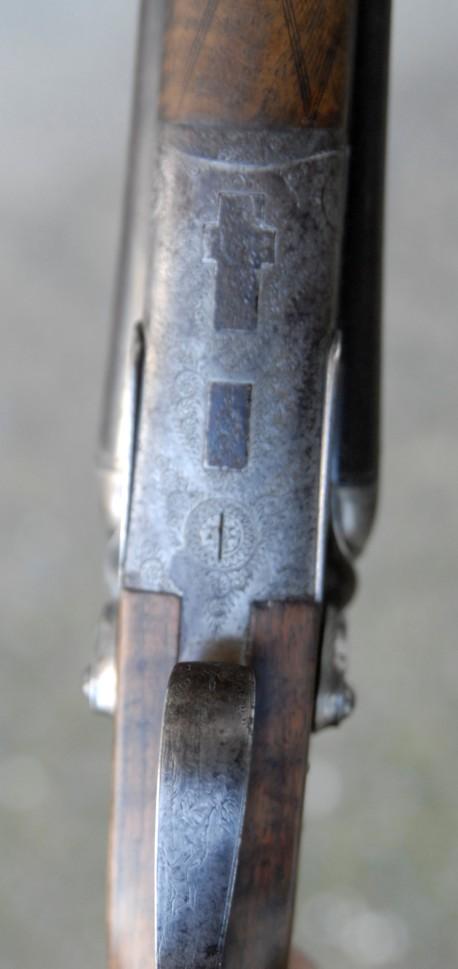
Some of the most beautiful work of this craftsman, and many others, are in this book “Liège Gunmakers through their Work. 1800 - 1950”.
For more detail see: LIEGE GUNMAKERS
Tellings J.
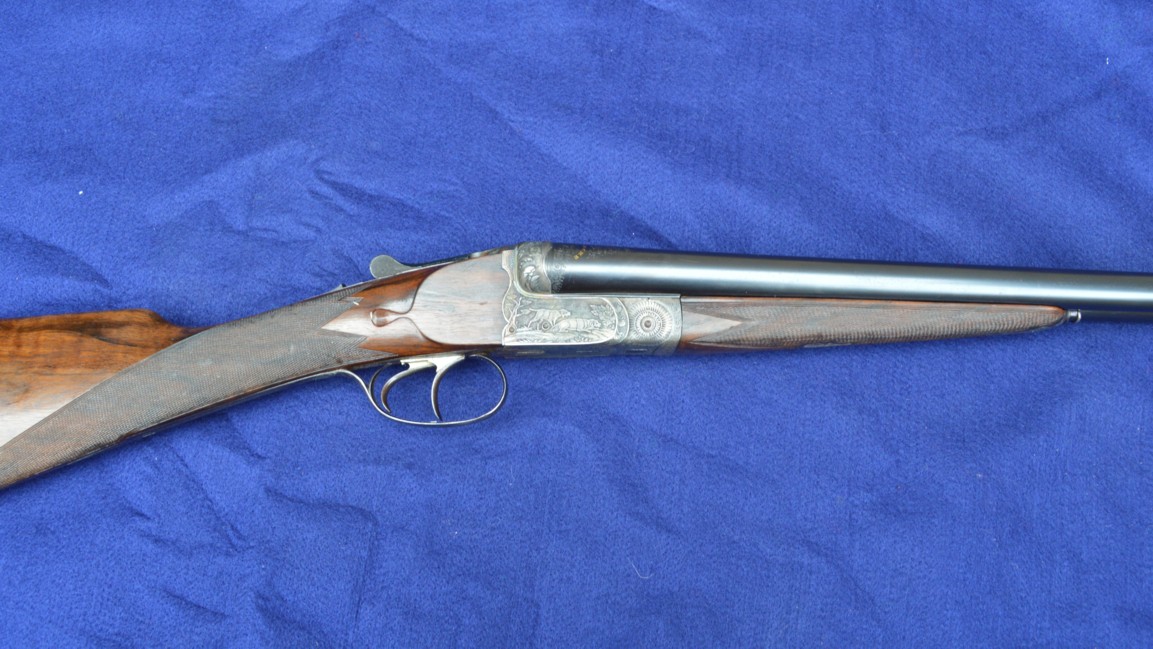
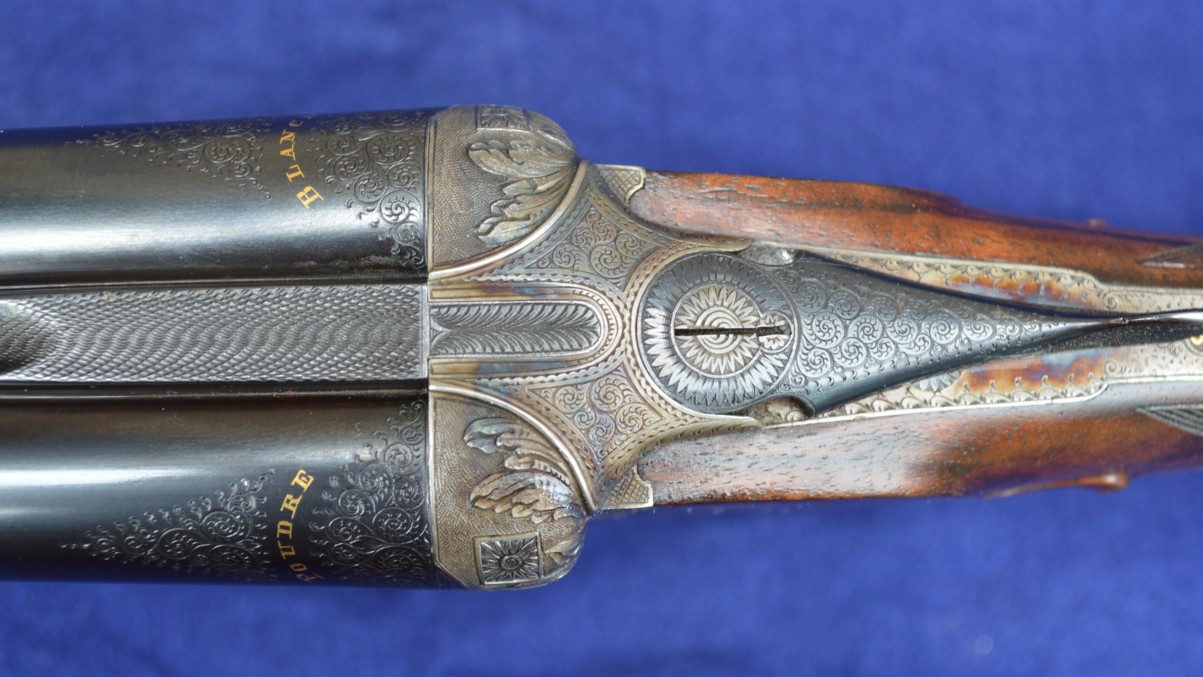
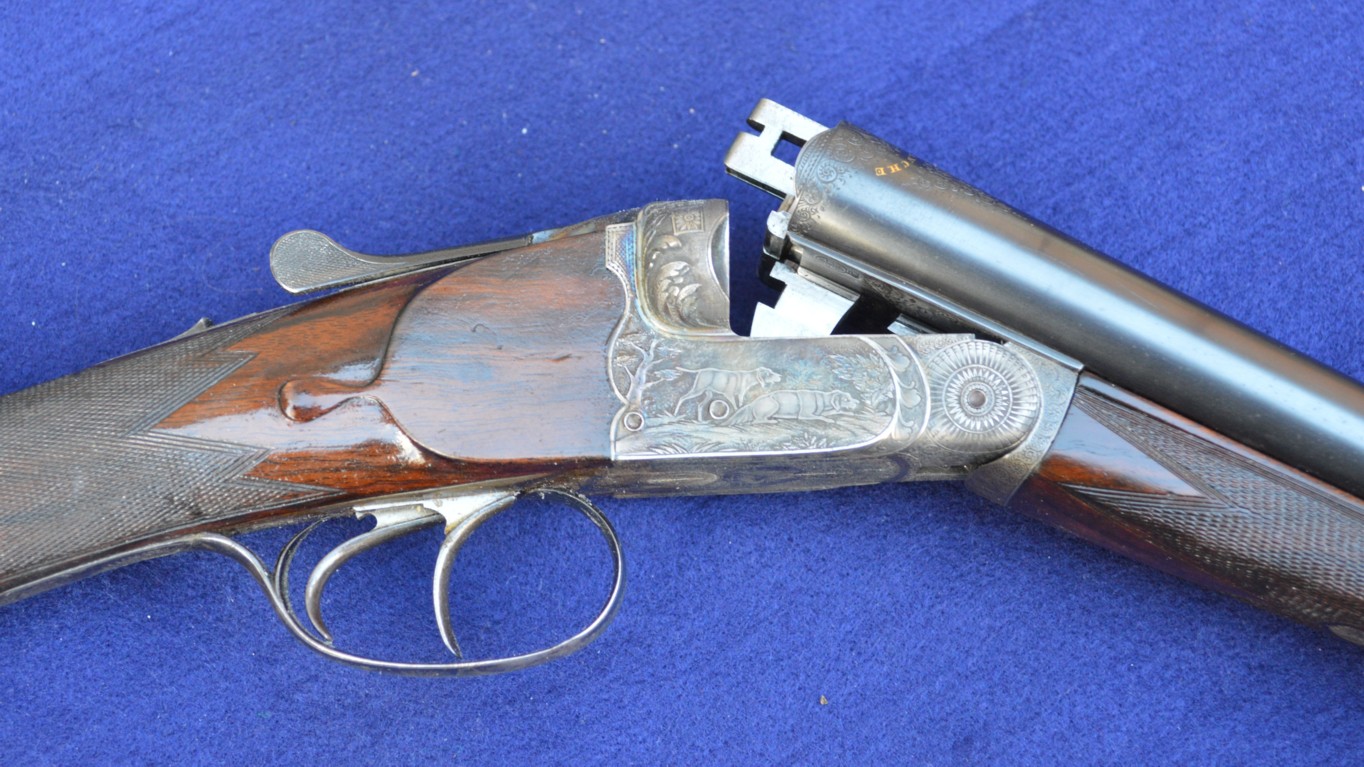
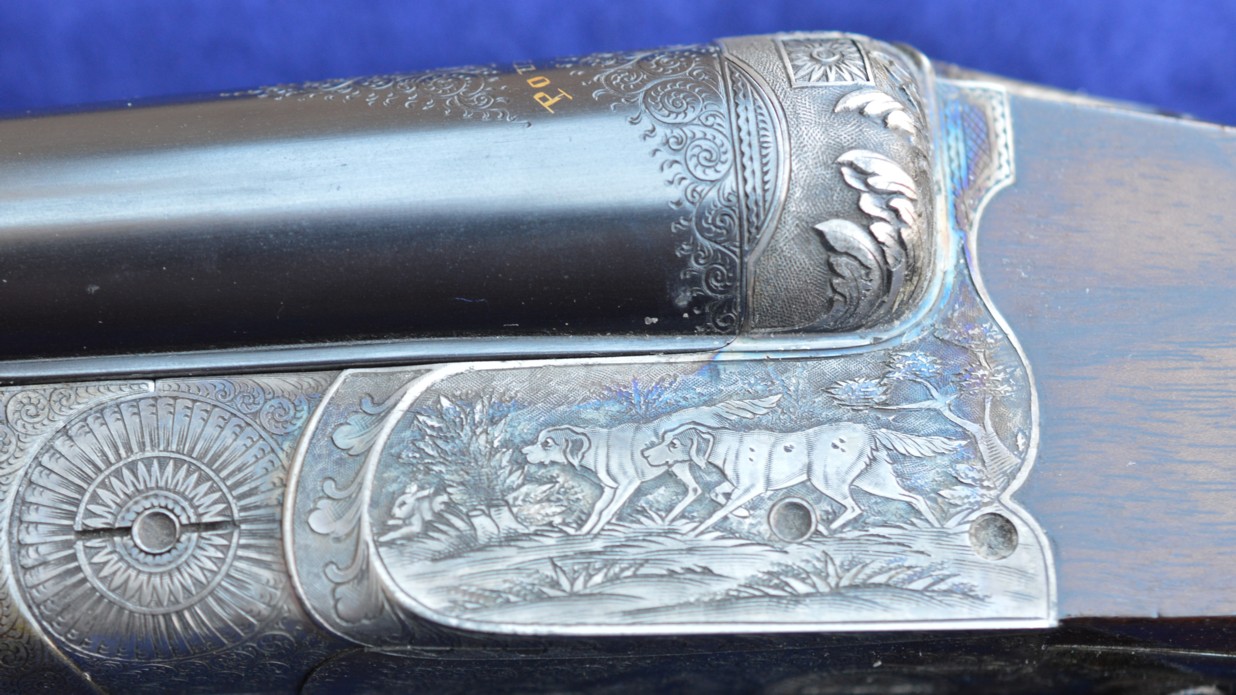
Here is a
very fine hammerless double-barreled shotgun with a classic design, featuring a
double trigger and a top-lever break. It has a push-button safety. Its metal
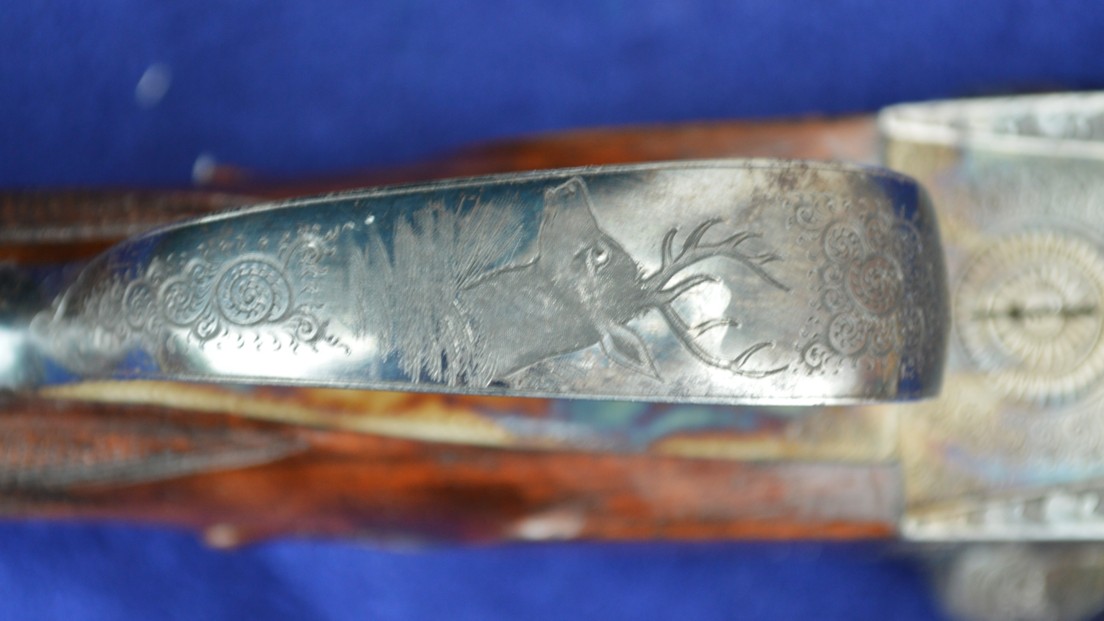
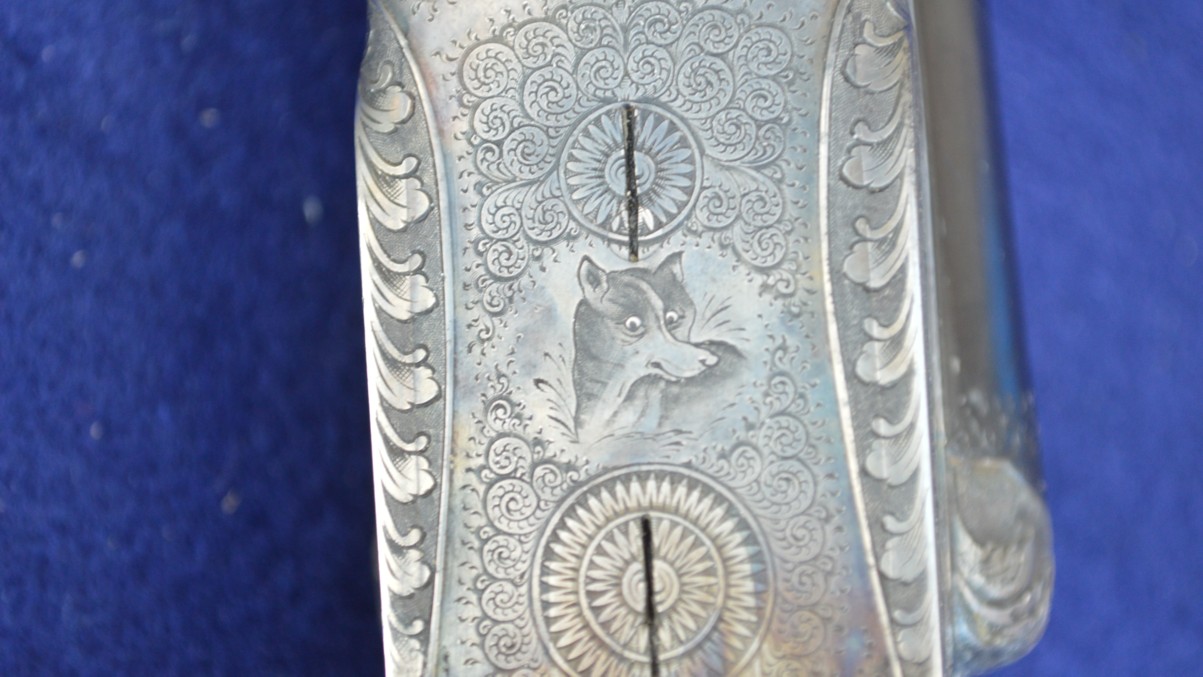
parts are superbly engraved (scrolls, floral motifs, hunting and game scenes).
The stock and forend are partially checkered.
Markings:
White
Powder (on the barrels).
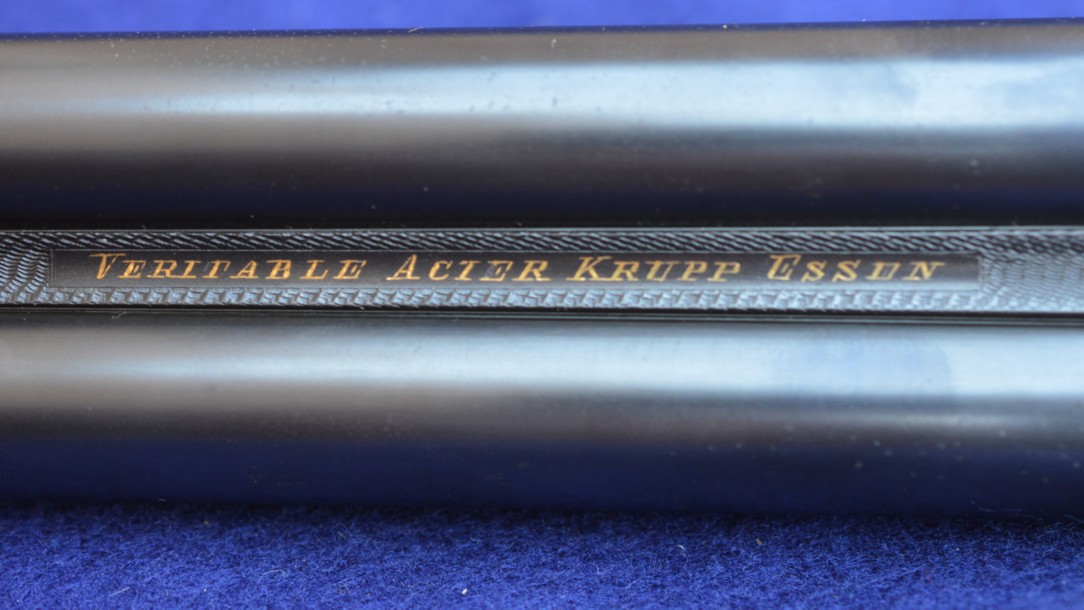
Genuine
Krupp Essen Steel (barrel rib).
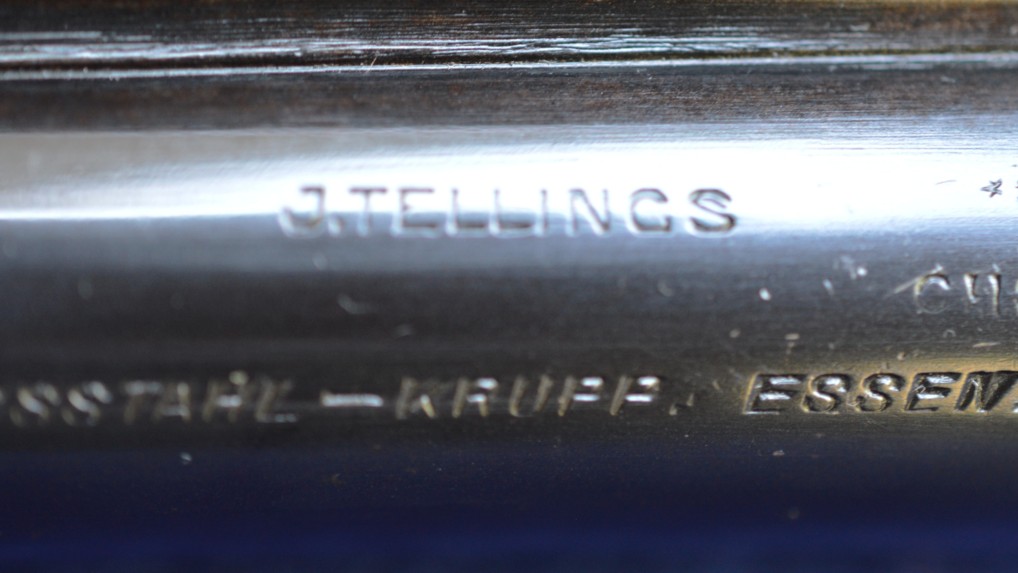
Flusstahl-Krupp-Essen (lower part of the barrels): FLUSSTAHL KRUPP means KRUPP
CAST STEEL, the steel from which the barrels were made.
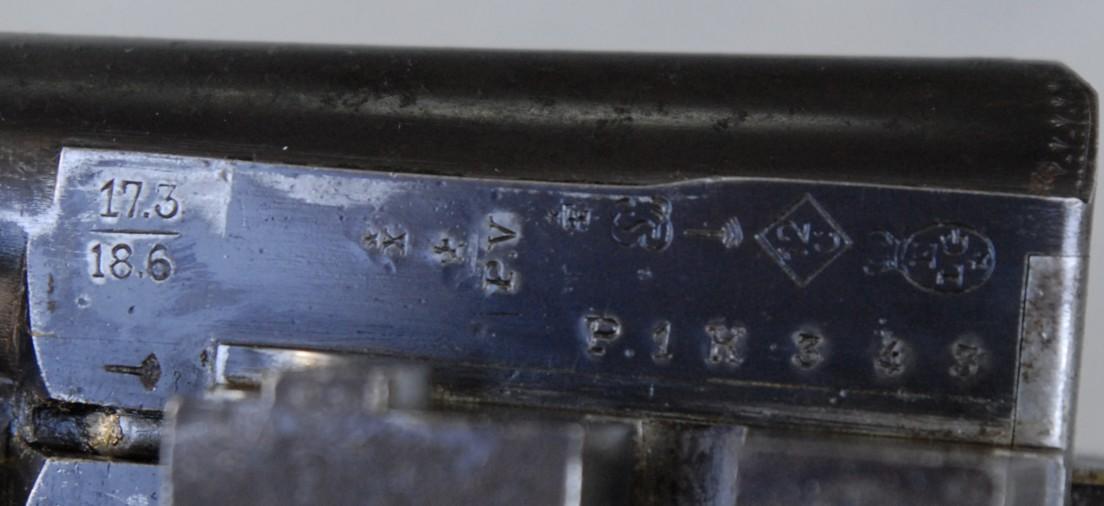
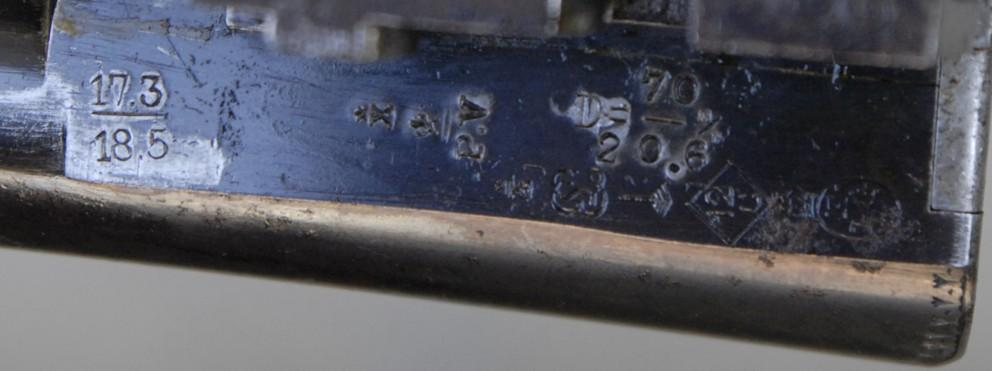
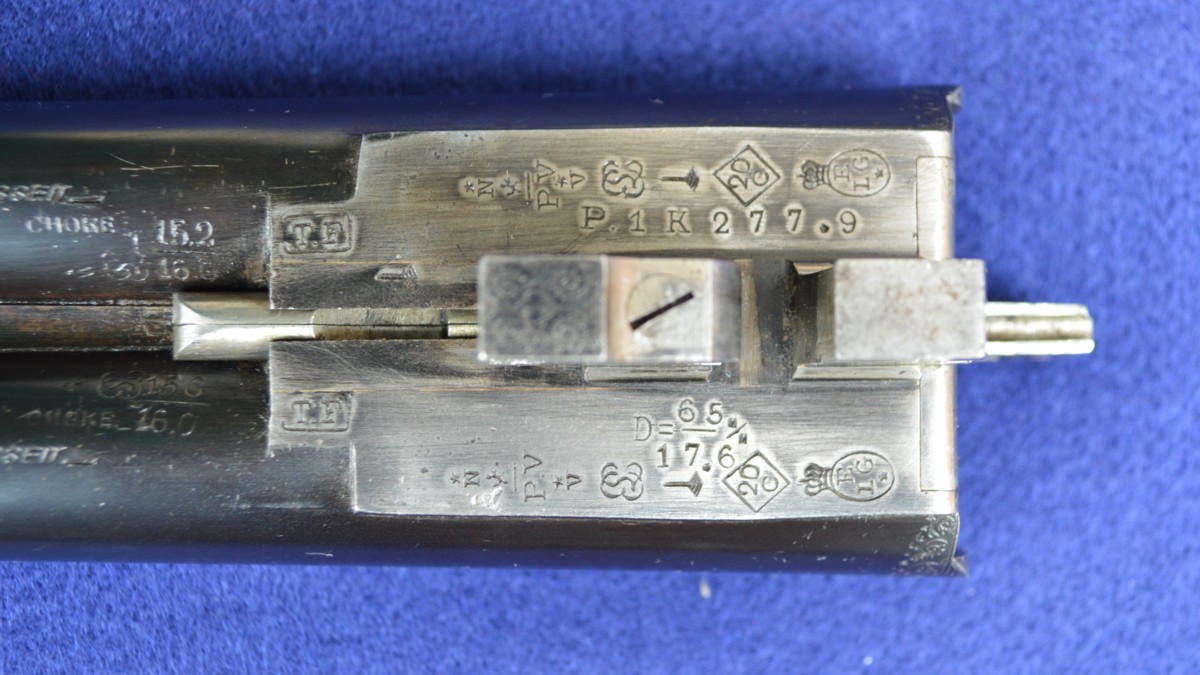
KG 1.277:
barrel weight for firing smokeless powder (smoothbore guns), to the nearest
gram. In use from June 30, 1924, to the present day.
15.2,
15.6, 16.0: choked barrels, calibrated in mm at 22 cm from the breech and at the
muzzle. In use from 1910 to 1924.
N under a
star, V under a star: countermarks of the inspectors, in use from 1877 to 1968.
P.V under
an erect lion: proof with smokeless powder (burning powder) since 1898 – but
actually since 1903.
EL in
cursive script: provisional proof, in use from 1852 to the present day.
20 C in a
lozenge: caliber, in use from 1898 to June 30, 1924.
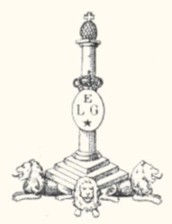
ELG on a
crowned oval star: final acceptance, in use from 1893 to 1968.
Perron:
inspection, in use from 1853 to the present day.
D = 65 mm
/ 17.6: chamber length in mm and diameter in mm after optional smokeless powder
proofing. In use from 1892 to 1924.
The
provided photos did not allow for the identification of any date letter. The
weapon could therefore predate 1922… subject to confirmation!
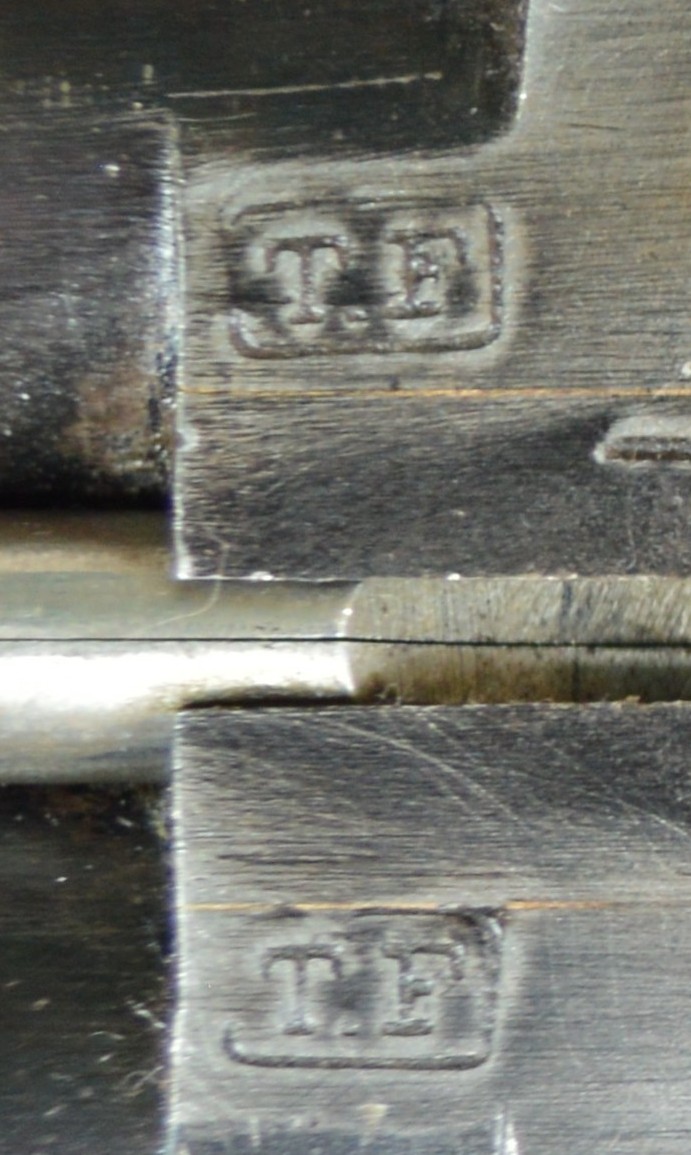
TF in a
rectangle: marking of the Théate Frères firm, well-documented on the website,
see:
https://www.littlegun.be/arme%20belge/artisans%20identifies%20t%20w/a%20theate%20freres%20fr.htm
While
Théate Frères' involvement in the production of this rifle is undeniable, J.
Tellings' signature on the underside of the barrels raises several questions:
1. What
exactly was the nature of this gunsmith's involvement: barrel manufacturing,
assembly and/or finishing of the weapon, or simply resale? It should be noted
that a description of J. Tellings on the website shows a hunting rifle marked
"PN" in a rectangle, as well as the signature "E. Bernard," which already
suggests the use of subcontractors. See:
https://www.littlegun.be/arme%20belge/artisans%20identifies%20t%20w/a%20tellings%20j%20gb.htm
2. Who exactly is J. Tellings? Indeed, the website
states: “J. Tellings is not listed in the Liège
gunsmith directory, but a Hubert Tellings, gunsmith at 330 rue Vivegnis in
Liège, is. In 1880, he filed patent 222,993 for a method of assembling
double-barreled shotgun barrels.” See:
https://littlegun.be/arme%20belge/artisans%20identifies%20t%20w/a%20tellings%20j%20gb.htm
However,
research by the team members revealed a date error concerning this patent, which
was actually validated on January 26, 1910, by a Mr. Hubert Tellings, gunsmith
at 330 rue Vivegnis in Liège.
The first
source identified mentions a Joseph Tellings, gunsmith, born on July 23, 1882,
in Liège, who died on February 25, 1927, at the age of 44.
A member
of the team undertook as thorough a genealogical search as possible and was able
to compile a list of candidates from a Tellings "dynasty," which is listed in
the appendix to this document. He identified numerous Tellings gunsmiths from
the late 19th and early 20th centuries, several of whom came from the same
lineage (Tellings-Dekeyser).
Here are
his main hypotheses:
1. His first observation:
"Joseph and/or Hubert? I would tend to say both...
Because these are two first names that were frequently and traditionally
associated... With a bit of luck, we're dealing with just one individual!"
2. “The patent holder
mentioned in the ‘Who’s Who’ would more likely be: Tellings-Duchêne J.,
gunsmith, 318 rue Vivegnis, then 330 rue Vivegnis. This refers to Jean Hubert
Tellings, born August 25, 1865, in Liège, married September 14, 1889, in Liège,
to Marie Anne Duchesne, and died July 31, 1938, in Liège, at the age of 72.
Gunsmith.” This hypothesis is plausible because
the rule applied in the 19th and early 20th centuries regarding civil
registration stipulated that the given name followed by the surname was the
official given name, not the first name in the direction of reading, as is the
case today! Therefore, the given name Hubert appearing on the patent does not
preclude the possibility that the initial J, as on the rifles, could refer to
the same person.
3. In
conclusion, the Tellings we are interested in here would therefore be the
latter: Tellings-Duchêne J., gunsmith, 318 rue Vivegnis (1897) then 330 rue
Vivegnis (1910), namely the Jean Hubert Tellings mentioned above.
Two firms
thus share the responsibility for this shotgun: Théate Frères as a probable
subcontractor (manufacturer of the barrels or even the entire gun), and Jean
Hubert Tellings as a retailer and assembler, all of which is subject to
confirmation.
In
conclusion, this fine hunting shotgun was produced in Liège in collaboration
between Théate Frères and the gunsmith Jean Hubert Tellings (subject to
confirmation), although the role of each cannot be established with the current
state of knowledge. It was proofed in 1924 according to the analysis of the
hallmarks, but could have been manufactured earlier (from 1910 onwards) if the
absence of an annual letter is confirmed.
Chris, PHL, Max, HPH, Alberto, Alain
Anecdote:
The
German company Krupp, based in Essen, has historically specialized in
steelmaking, where it acquired an international reputation. However, this
reputation was tarnished by its close ties to the Nazi regime during the Second
World War, for which it produced large quantities of weapons with obvious
complicity. In a speech, Hitler urged German youth "to become as hard as Krupp
steel!" For more information, see:
https://fr.wikipedia.org/wiki/Alfred_Krupp
Appendix:
The "Tellings Dynasty":
According
to several directories and a genealogy website, here are the results of PHL's
research:
1.
Lasalle Directory 1897
Tellings-Dekayser J., gunsmith, 300 rue Vivegnis
Hubert
Joseph TELLINGS (gunsmith)
Born
October 22, 1857 (Thursday) - Liège, Liège, Belgium
Died
November 18, 1912 (Monday) - Liège, Liège, Belgium, Age at death: 55
Married
December 30, 1882 (Saturday), in Liège, to Pauline DEKEYSER in 1862 - and had 10
children:
Lambert
Hubert Tellings 1883-1959
Joséphine
Tellings 1885-1889
Paul
Tellings 1887-1888
Pierre
Tellings 1888-1888
Marcel
Tellings 1889-
Jean
Hubert Tellings 1891-
Louise
Augustine Tellings 1893-
Melchior
Tellings 1897-
Théodore
Tellings †
Tellings-Ghaye F., gunsmith, 39 rue sur la Fontaine
Franciscus Joannes (François Jean) Tellings
Born July
5, 1863 (Sunday) - Maastricht, Limburg, Netherlands
Died June
12, 1933 (Monday) - Liège, Belgium, at the age of 69
Married
November 12, 1887 (Saturday), Liège, Belgium Belgium, with Lambertine Antoinette
Ghaye (1859-1896), had two children:
Maria
Tellings
Leon
Henri Tellings (1888-1972)
Tellings-Duchêne J., gunsmith, 318 rue Vivegnis
Jean
Hubert Tellings
Born
August 25, 1865 (Friday) – Liège
Married
September 14, 1889 (Saturday), Liège, to Marie Anne Duchesne
Died July
31, 1938 (Sunday) – Liège, Belgium, at the age of 72
Gunsmith
and/or Equipor Gunsmith
2. Desoer
Directory 1899
Tellings
F., gunsmith, 21 Chevaufosse
3.
Lasalle Directory 1910
Tellings
J., gunsmith, rue Vivegnis 330
4. Other
Sources
Joseph
Tellings
Born July
23, 1882 (Sunday) - Liège, Belgium
Son of
Hubert Joseph Tellings (1857-1912) and Pauline De Keyser (1862-1948)
Died
February 25, 1927 (Friday), Age at death: 44
Gunsmith
Married
October 28, 1906 (Sunday), Liège, Belgium, to Maria Mouzon (1885-1971) and had 1
child
Joseph
Tellings (1909-1958)
Hubert
Tellings
Born
September 22, 1883 (Saturday) - Liège, Belgium
Son of
Hubert Joseph Tellings (1857-1912) and Pauline De Keyser (1862-1948)
Deceased
Gunsmith,
Gunsmith worker
Jean
Hubert Tellings
Born
September 7, 1891 (Monday) - Liège, Belgium
Son of
Hubert Joseph Tellings (1857-1912) and Pauline De Keyser (1862-1948)
Deceased
Gunsmith
Marcel
Tellings
Born
August 29, 1889 (Thursday) - Liège, Belgium
Son of
Hubert Joseph Tellings (1857-1912) and Pauline De Keyser (1862-1948)
Deceased
Gunsmith
worker, Gunsmith
Jean
Hubert Tellings
Born
September 7, 1891 (Monday) - Liège, Belgium
Son of
Hubert Joseph Tellings (1857-1912) and Pauline De Keyser (1862-1948)
Deceased
March 14, 1975 (Friday) - Sprimont, Liège, Belgium, at the age of 83
Gunsmith
Martin
Bernard Tellings
Born June
17, 1853 (Friday) - Maastricht, Netherlands
Died
August 4, 1894 (Saturday) - Liège, Belgium, at the age of 41
Gunsmith,
Fitter
Martin
Bertrand Tellings
Born June
17, 1853 (Friday) - Maastricht, Limburg, Netherlands
Died
August 3, 1894 (Friday) - Liège, Belgium, at the age of 41
Gunsmith
Lambert
Hubert Tellings
Born
September 22, 1883 (Saturday) - Liège, Belgium
Died
March 9, 1959 (Monday) - Liège, Belgium, at the age of 75
Gunsmith
Lambert
Hubert TELLINGS
Born June
28, 1828 (Saturday) - Maastricht, Limburg, Netherlands
Died
April 14, 1879 (Monday) - Liège, Belgium, at the age of 50
Gunsmith
Tellings J.
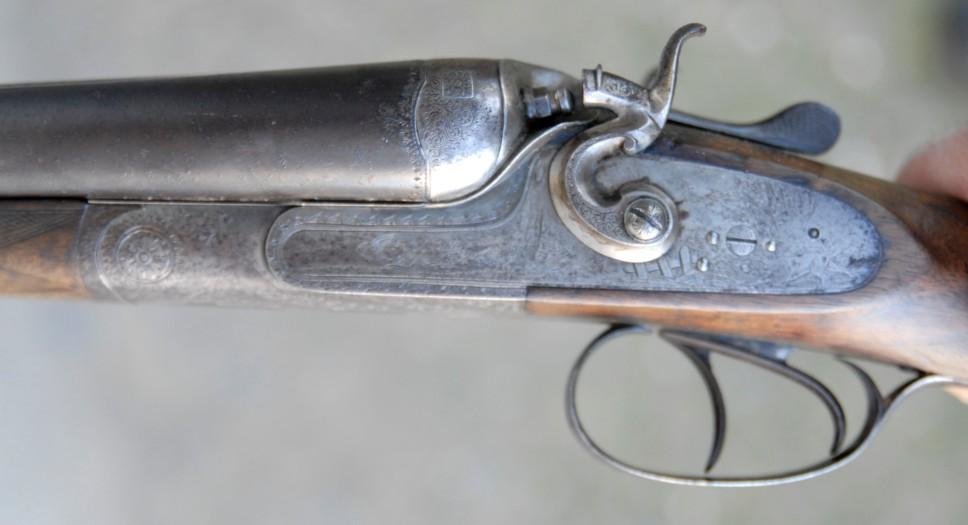
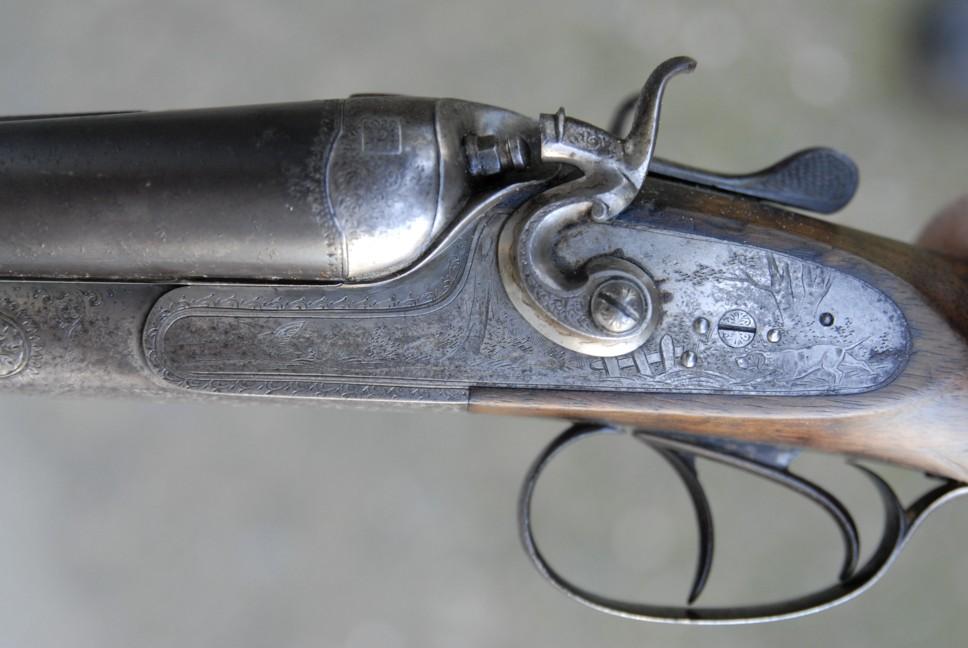
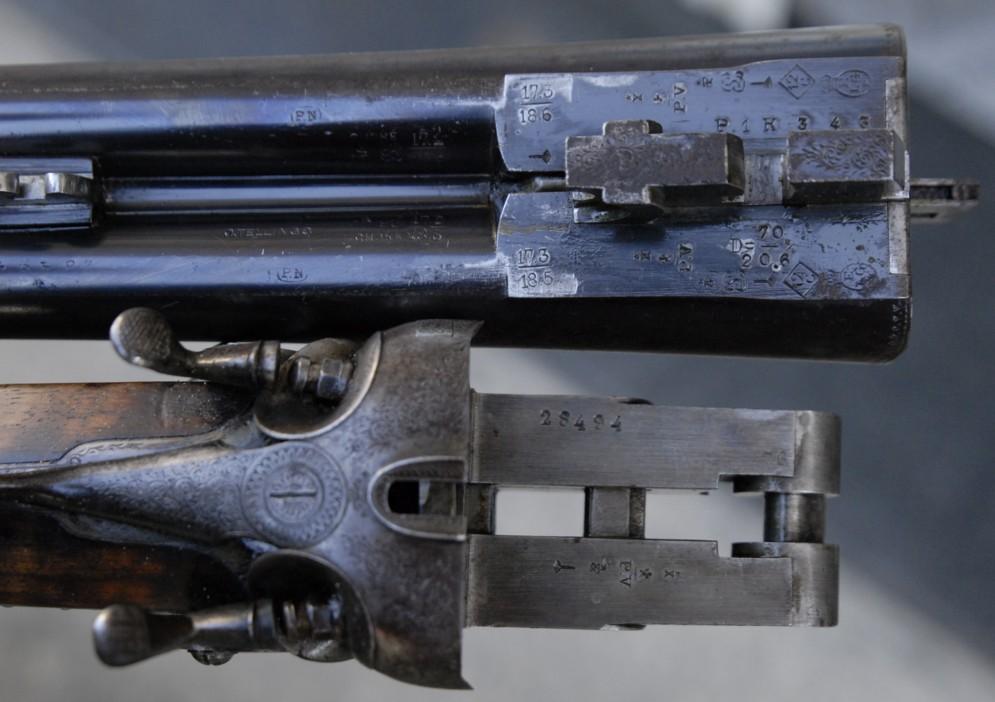
It is
about a shotgun of gauge 12, with juxtaposed unrifled bores and external
hammers. Locks known as “ahead” and are nicely engraved scenes of hunting. The
opening (crack) is practiced using the key “Top Lever”.
The stick
in walnut is worked “pistol”.
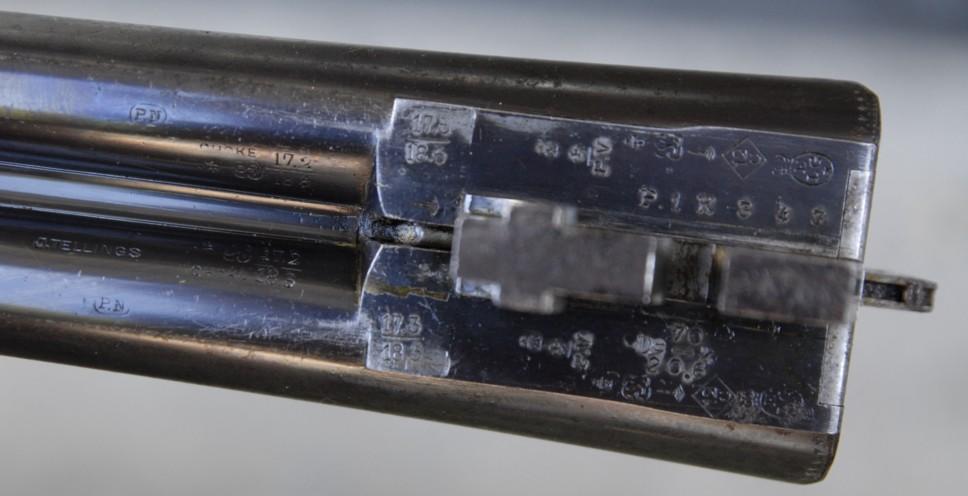
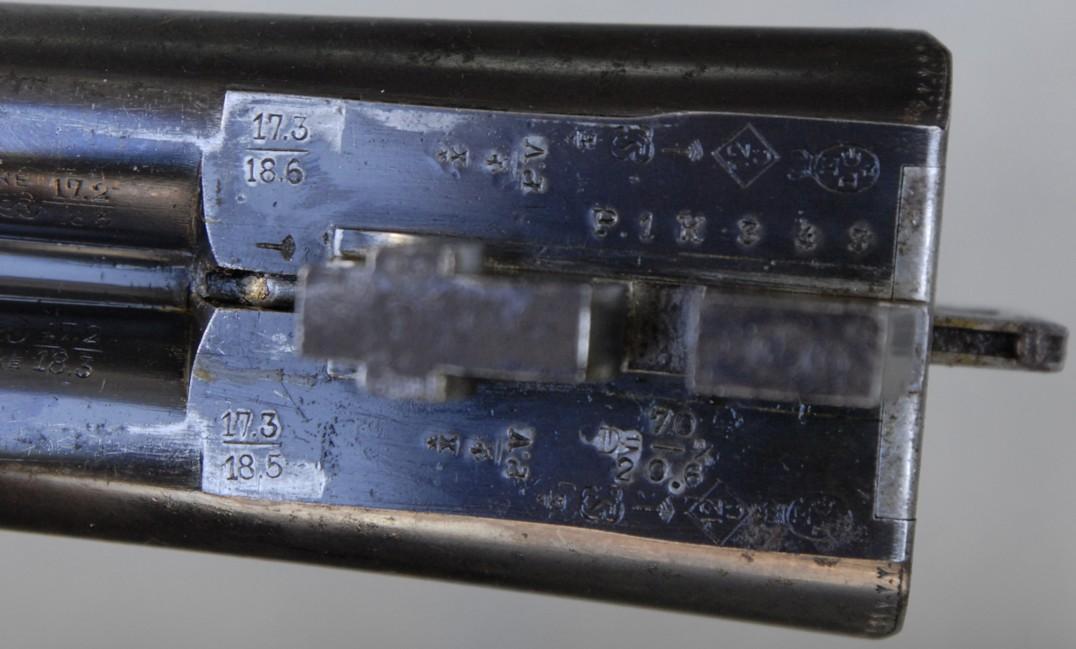
The
weapon carries the lawful punches of the proofhouse of LIEGE, that is to say:
ELG* in a
crowned oval:
final acceptance, of use of 1893 to 1968.
X* and P*:
countermarks of the controllers, of use of 1877 to 1968.
12 C in a
rhombus:
gauge, of use of 1898 to June 30, 1924.
EL in
English letters:
provisional test, of use of 1852 to our days.
PV
surmounted of a stylized lion: test with the powder without smoke, of use of 1898 to 1968.
Peron:
inspection, of use of 1853 to our days.
P. 1K343:
weight of the barrel which can draw from the powders without smoke (weapons
smooth) except for the gram. In use from June 30, 1924 at our days.
D = 70 mm
/20.6:
length of the room in mm and diameter in mm after optional test with the powder
without smoke. In use of 1892 to 1924.
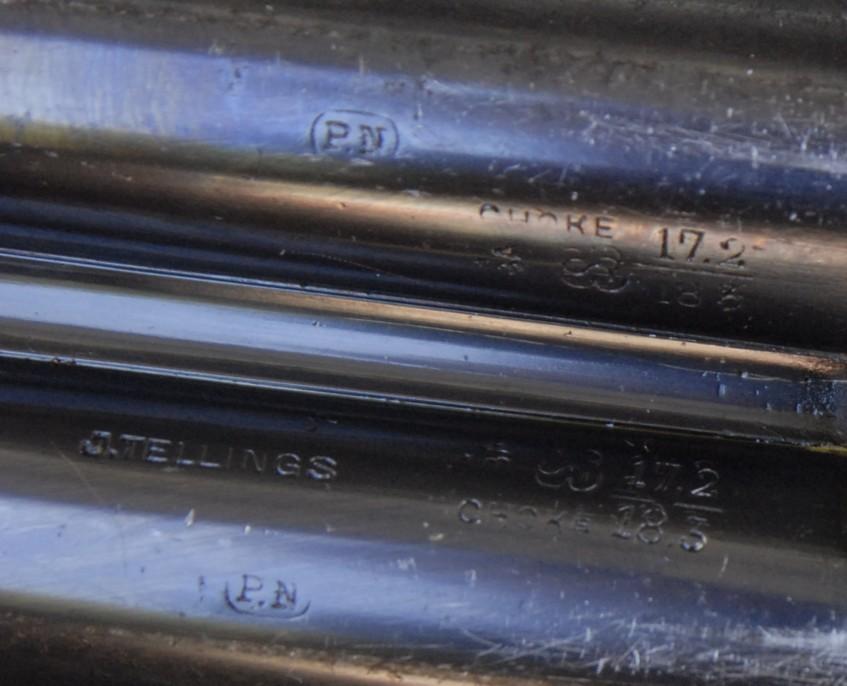
CHOKE
17.2/18.3 and 17.3/18.5: chokes barrels, gauged in mm to 22 cm of the breech and the mouth. In
use of 1910 to 1924.
PN in a
circle on the barrels:
probably a mark of manufacturers of barrels of rifles which do not appear in the
list of the manufacturers of Vesdre (river between Liege and Verviers, Belgium).
J.
TELLINGS
is not included in Who’s Who arms manufacture of Liège but well a
TELLINGS Hubert,
arms manufacturer street Vivegnis, 330 in LIEGE. In 1880 it deposits a patent
222.993 for a mode of assembly of the barrels of rifles with 2 blows.
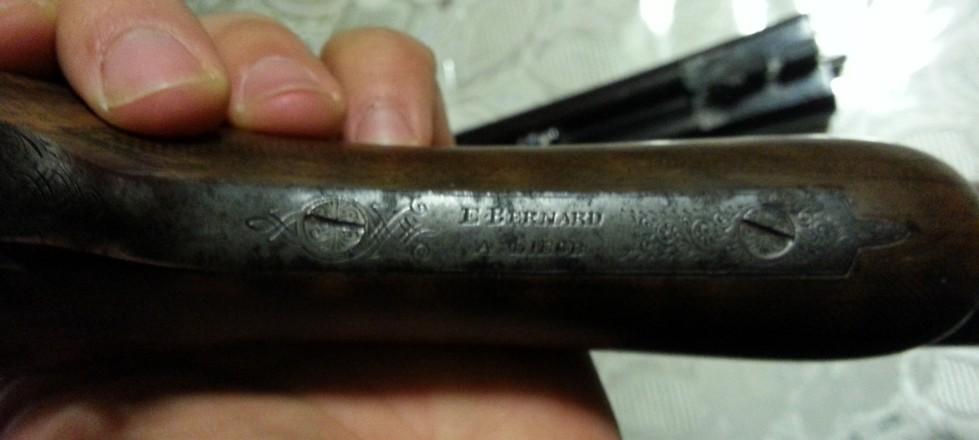
E.
BERNARD LIEGE:
Thanks to the punches and their validity dates, I think that it is about BERNARD
E(mile?) holy Mount Martin (XXe century).
GG