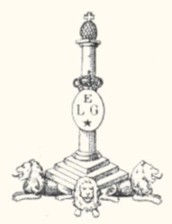
Manufacture d'Armes de l'Etat

March 08, 1838, the Minister for the War adopts the purchase of a ground located in LIEGE street Saint Léonard.

It acts of the official birth certificate of the Munitions factory of the State which will be built soon at this place.

This manufacture had one customer, the Belgian State!

It quickly becomes the first manufacturer of portable weapons for the various army corps.

It develops of many systems and modernizes successfully of the fire arms of use in the Belgian army, the gendarmerie, the customs and the civic guard.

After the creation of the “Fabrique Nationale” (FN) the M.A.E. is confined with maintenance, the repair or the reconditioning of the weapons of the Belgian army.

Far from limiting itself to the fire arms, it is also occupied of the bayonets (lances, sabres, bayonets)

The production of spare parts also occupies a considerable place in the company.

In the advertisement of the First World War, the company is quickly moved towards ANTWERP except the large parts which remain on the spot.

Within the current of this war, the workmen and the frameworks survivors establish a repair shop in CALAIS 22#(F) and a manufacturing plant in BIRMINGHAM.

It will take again its activities in LIEGE since 1918 until its closing in 1940.

GG & MD.

Mauser 1936

The MOD. 36, sometimes called 89/36 is the attempt at modernization of Belgian Mauser mod.1889 initial to obtain the same characteristics as the MOD. 35 (insufficiency of production to the day before of the war or economies?). There remains of the original only the box of cylinder head, the trigger guard with the store covering and the part before body of bolt and its short extractor turning with him. New barrel, raises, hand-shield, spacer of retreat, grenadière, to embouchoir, tenon of bayonet, handlebar and ears of protection are those of the MOD. 35. The posterior part of the bolt is also modified with the result that, contrary to the MOD. 89, armed takes place at the time of the opening.

All these amendments were carried out by the “Manufacture d'Armes de l'Etat" * in Liege and also... Anc. Pieper Establishments In Herstal.

100.000 weapons "would have been renovated" in this way.

 * The "Manufacture d’armes de l’état" is downward Foundry of Guns of Liege (1803) and the ancestor of current Arsenal of Rocourt. 8/3/1838, acquisition by the Ministry for the War of a ground of 77ares street St-Léonard in Liege. The set up building will bear the name of “Manufacture d’armes de l’état".

HPH

Sources: AMI n°9 May, 1980 - Book memorial 1803-2003 "2 centuries of heritage of the Foundry of Guns of Liege" of Cdt Alain Descy

Photographs friendly authorized by "Antiquefirearms.com"

GUN OF GENDARMERIE TRANSFORMS

At the origin with flint, this gun of Belgian gendarmerie was transformed into percussion with the MANUFACTURE D’ARMES DE L’ETAT rue St Léonard in LIEGE about 1853 is rather tardily as the punch of the bench of test testifies some.

Its turntable is traditional and the barrel is smooth.

The barrel has no sight, current thing at the time since it was acted in fact of using the weapon with bearing end in contribution of the use of the sabre.

The fixing of the gun is ensured by a brass cap and a hook. The hammer is curved towards the interior to ensure a good percussion on the chimney. The right trigger is protected by a brass trigger guard like the other accessories.

Mounting is in walnut smooth and oiled and also ends in a brass cap.

A simple iron rod with head of nail is placed in the barrel under the gun.

A hook of belt is fixed at against platinum.

INDEX TECHNICAL

Length: 265 mm

Barrel: 128 mm

Weight: 900 grams

gauges: 17,1 mm

Marks

A with crown: countermark of the controller of the bench of test of Liege used of the 30.12.1853 to the 26.01.1877.

GG

Manufacture d'Armes de l'Etat

Rifle Comblain 1888 of forester.

Calibre 11x 43R. Overall length of the weapon: 1,032 Mr. Manufacture of 1888 to 1896? Last known classification 2394 for the year 1896.

Christian

GB in an oval is the mark of Belgian state-owned property, 1889 is the date of manufacture. On the wood L(éopold) + 1888 and JD in a double circle is the stamp with initial of the inspector of the weapons and the principal controller. This seal was put on the right side of the sticks.

D in a circle is the marking of the regiment of the guides since 1874.

VC below - (Note of HPH - Certainly Victor Collette)

The other small marks in rhombuses are marks of the controllers of the metal parts and

are not indexed.

533 should be the job number of the weapon.

GG

Many thanks to Christian for the photos and the technicals details

Manufacture d'Armes de l'Etat

Terssen riffles

This model of Terssen, M1848/68 (lock postpones), is a transformation of the carbine of Hunters Thouvenin M1848; the other models Terssen, rifle Terssen or M1777/68 (front lock), is a transformation of the old Belgian rifle corrected M1777. The rifle was in equipment in the carabineers, rifle to the “Genie”.

Rik


Many thanks to the "ROYAL ARMY MUSEUM" Bruxelles for the pictures.

(N° identification : F71 Collection of "Comte de Ribaucourt")

The opening of the swivelling block is done while turning initially this key!!(1244)

The small Lion is the mark of the inspector of the weapons of war of the M.A.E., the letter can be different according to the inspector.

The other punches are those of the inspectors

GG

Manufacture d'Armes de l'Etat

Fusil Albini Braendlin

Many thanks to the "ROYAL ARMY MUSEUM" Bruxelles for the pictures.

(N° identification : F462 Collection of "Comte de Ribaucourt")

Back to "IDENTIFIED CRAFTSMEN"