Some of the most beautiful work of this craftsman, and many others, are in this book “Liège Gunmakers through their Work. 1800 - 1950”.
For more detail see: LIEGE GUNMAKERS
Dandoy C. & Armand
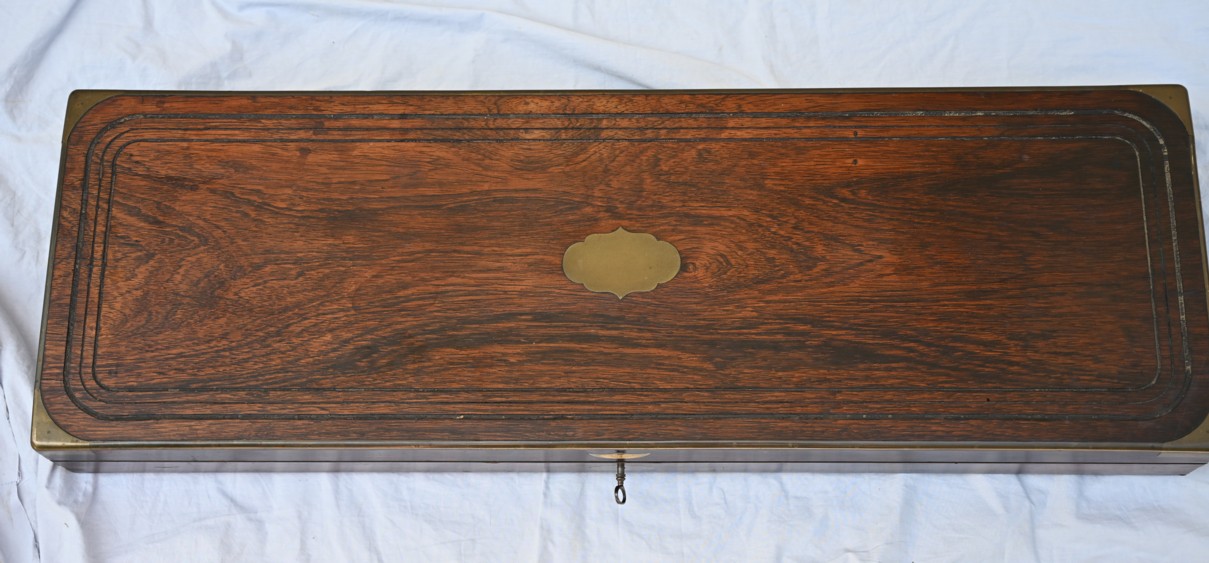
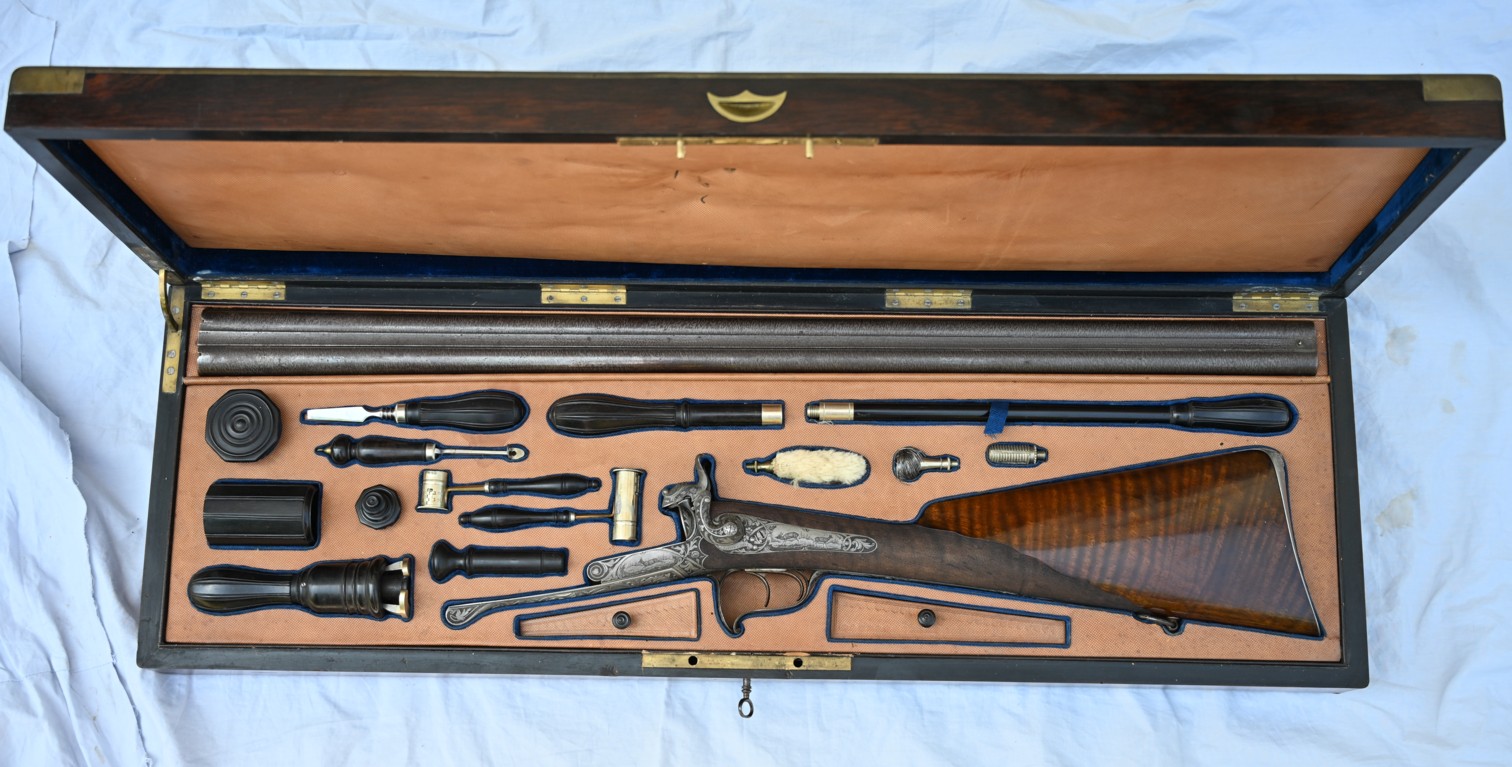
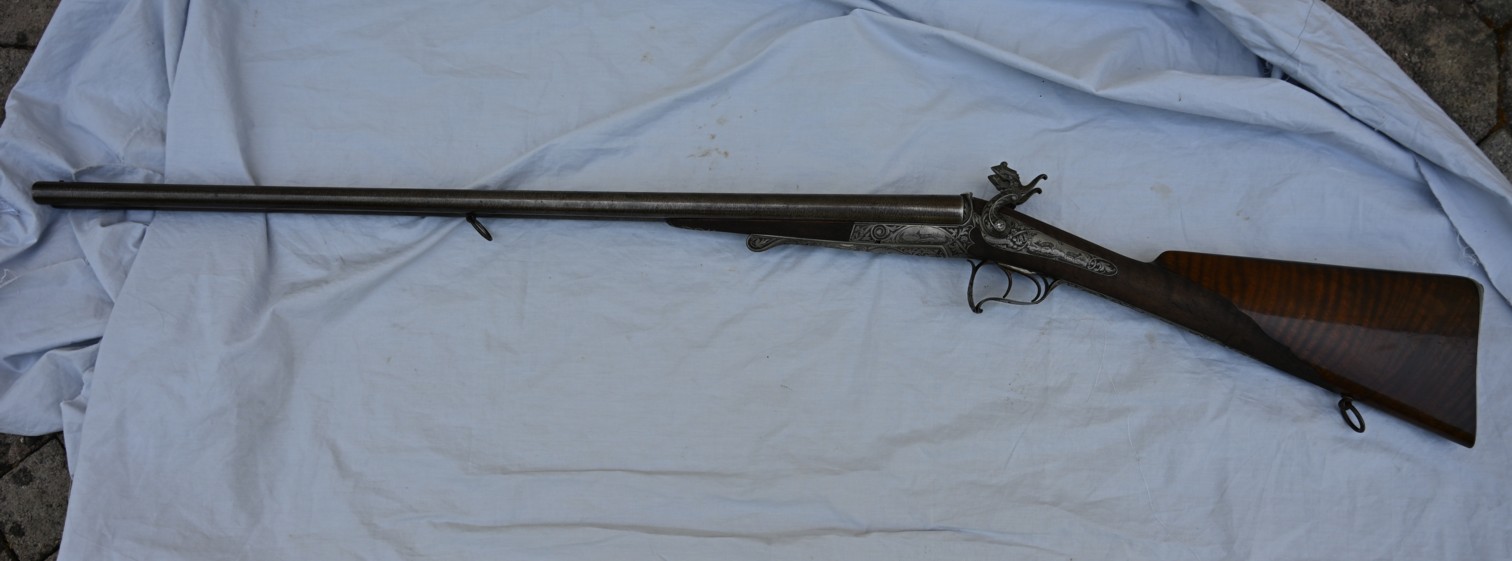
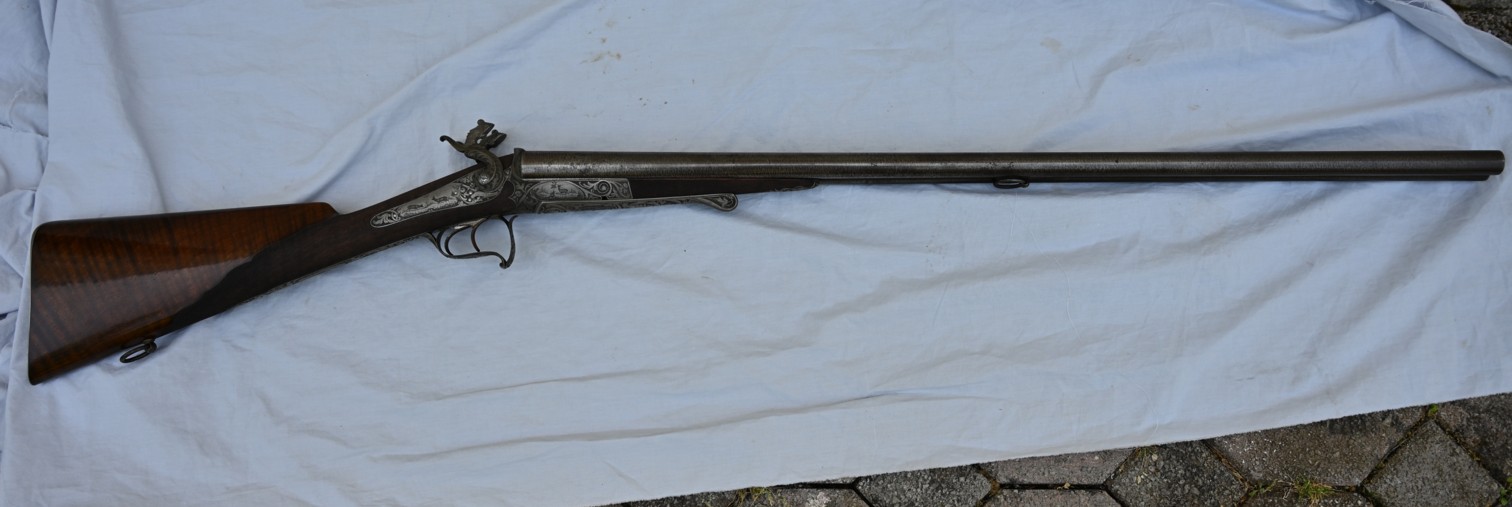
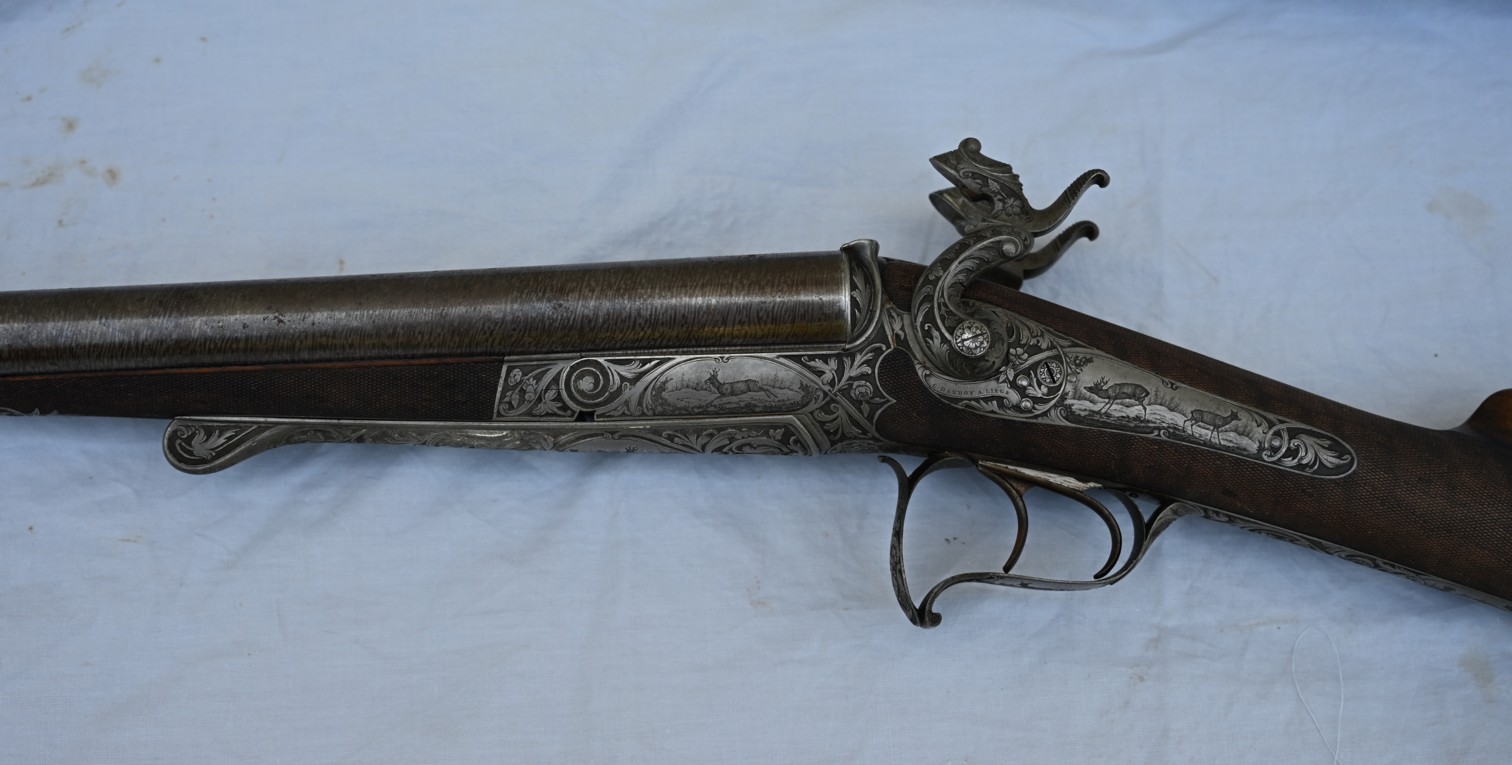
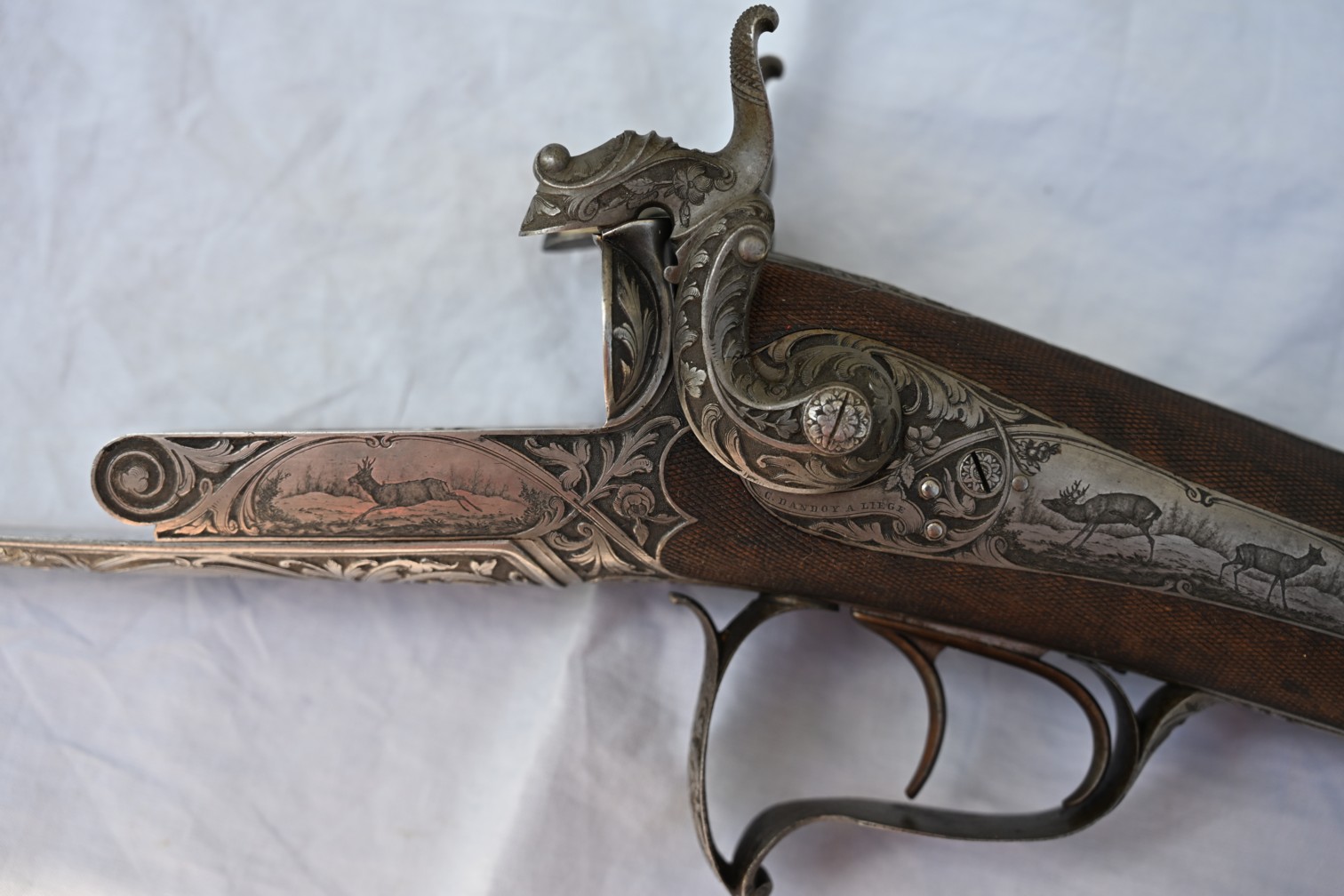
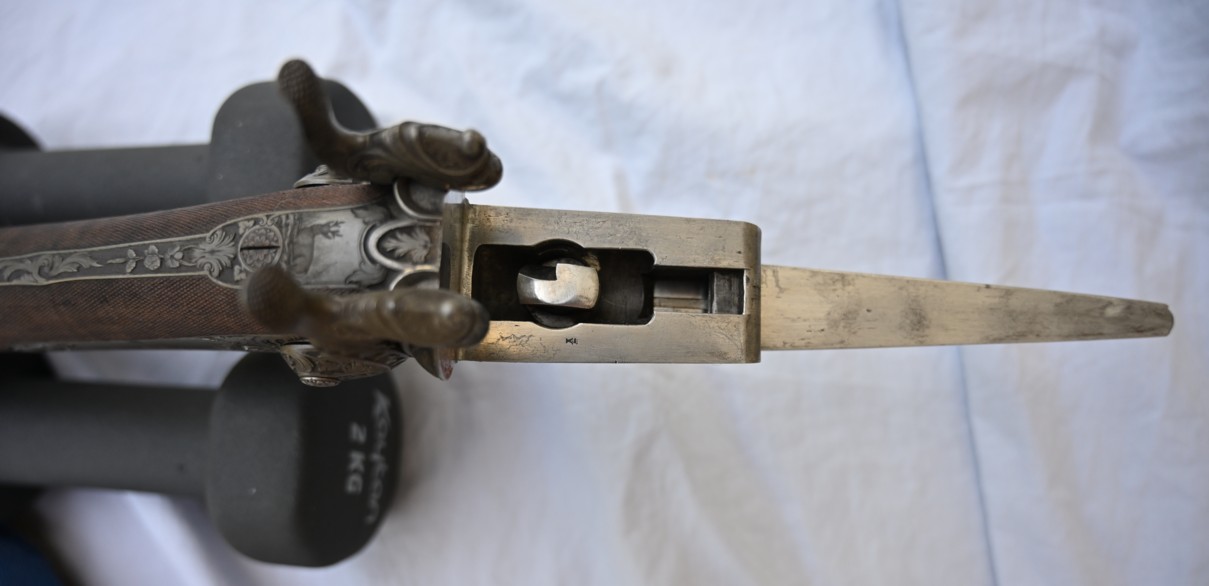
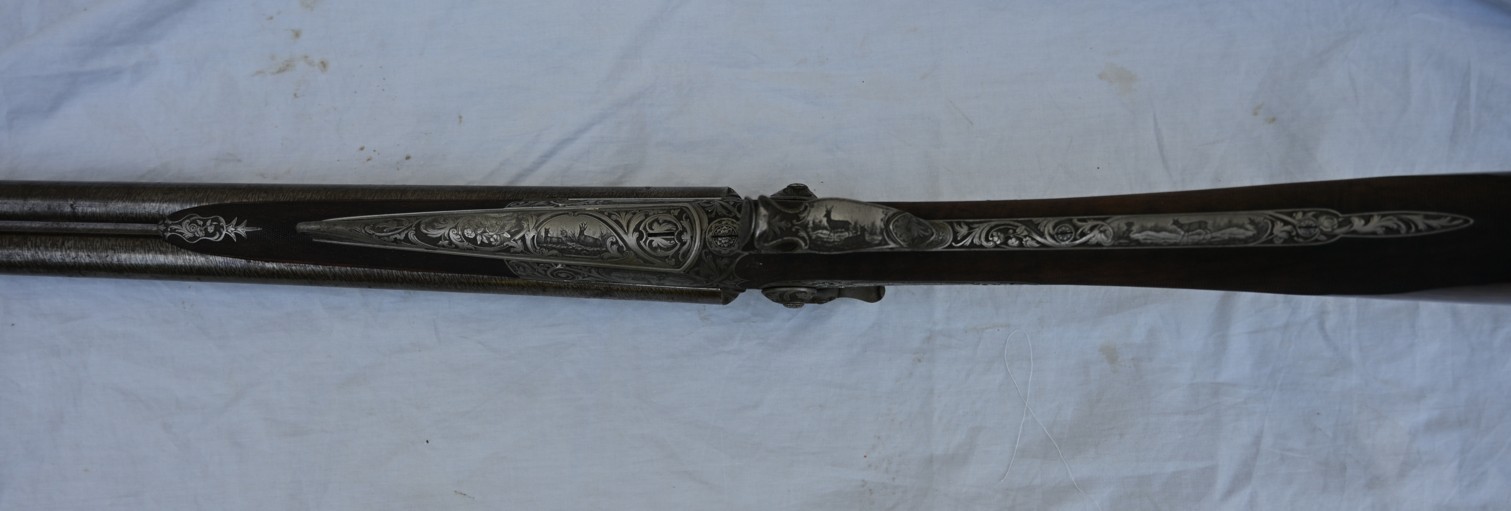
Here is a top-of-the-line hunting rifle, a testament to
the remarkable level of quality achieved by its manufacturer. With its two
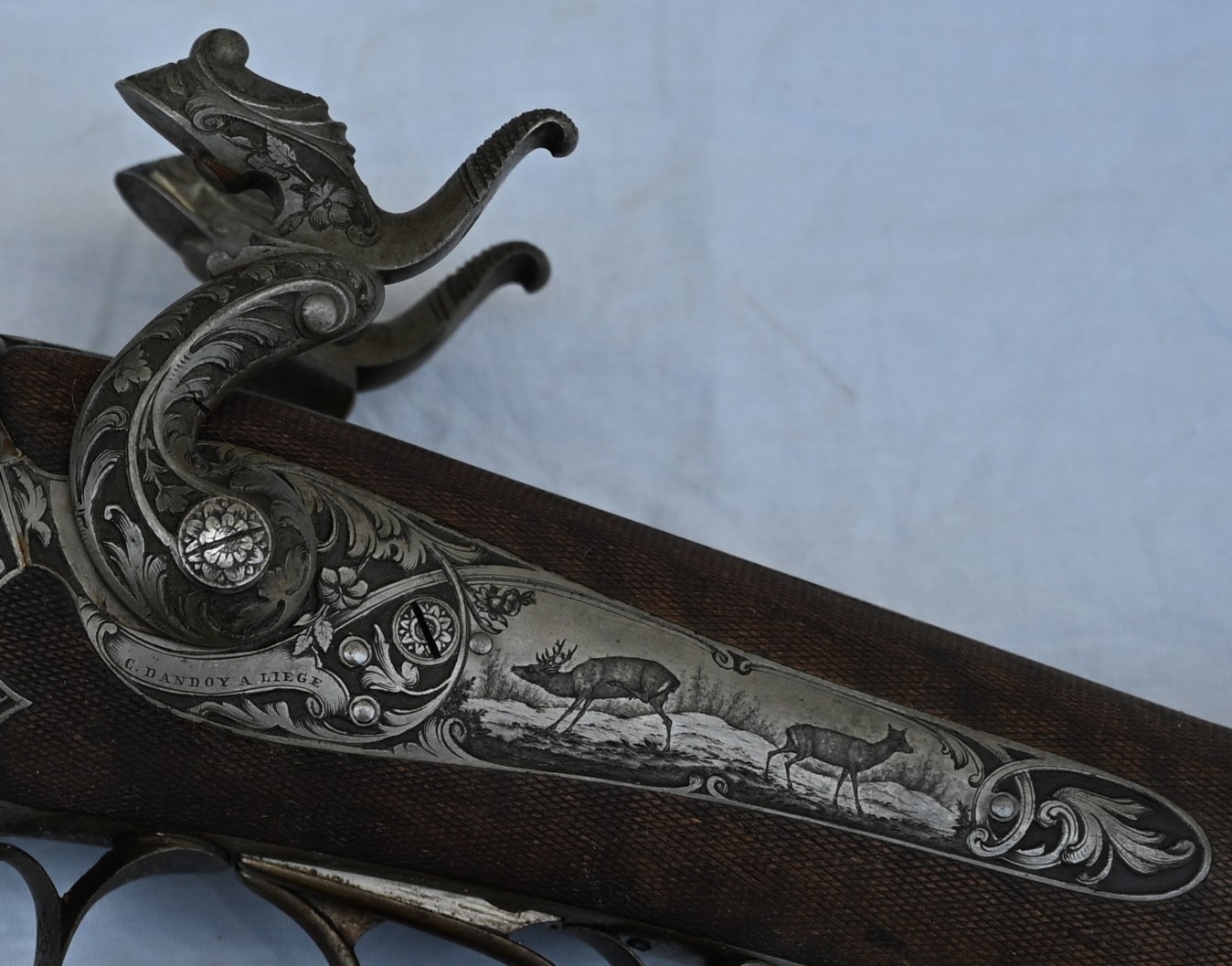
side-by-side Damascus steel barrels, superb engravings depicting various game
animals, scroll trigger guard, and two finely crafted hammers, this rifle
impresses with its ostentatious luxury. It comes with its original case and all
its accessories, the entire set (rifle, case, and accessories) being in perfect
condition.
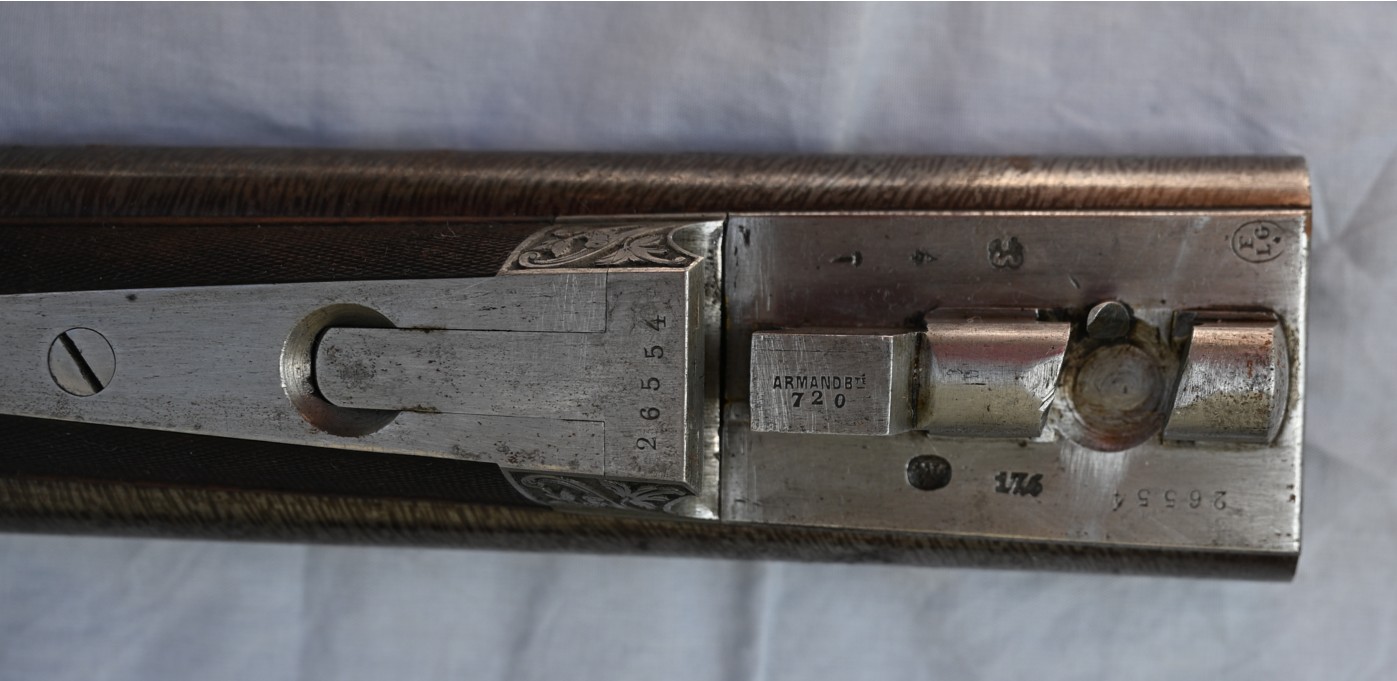
Markings:
Serial number 26554.
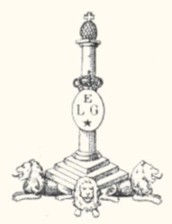
ELG on an oval star, proof mark from September 8, 1846,
to July 11, 1893.
Perron: proof mark of the inspector of the Proof House
(valid from June 16, 1853, to the present day).
EL in cursive script: provisional proof mark since 1853
(rifle barrels).
Choke 17.6.
A Y surmounted by a crown: the inspector's mark from
December 30, 1853, to January 26, 1877.
Two markings provide information about the weapon's
origin:
1. C. Dandoy in Liège (lock plate)
2. Armand Bté (under the barrels)
These two signatures suggest a Franco-Belgian
collaboration. The manufacturer would then be Charles Dandoy of Liège, listed on
the website at the following link:
https://www.littlegun.be/arme%20belge/artisans%20identifies%20d/a%20dandoy%20fr.htm
Note: Further information on the identity of this
craftsman is included in the appendix.
The name Armand may refer to the "Armand à Paris"
company, also known on the site and which produced fine hunting rifles, see:
https://www.littlegun.info/arme%20francaise/artisans%20a%20b/a%20armand%20fr.htm
In summary, this superb hunting rifle was produced in
Liège between 1853 and 1877, according to the analysis of the proof marks. It
comes from the workshops of Charles Dandoy, likely with the collaboration of the
Armand company in Paris, or at the very least, the use of an invention from that
company.
Chris, HPH
Appendix: The initial C preceding the name Dandoy on many
pieces has often been attributed to the first name "Célestin." A thorough study
by one of the team members (HPH) has demonstrated that this is a misconception
and that it actually corresponds to the first name "Charles." No trace of a
Célestin Dandoy can be found in literature or reference works (Jarlier, C.
Gaier's article in the MAL review, Qui est qui, etc.).
From 1851, Charles Dandoy worked in partnership with the
gunsmiths Maillard and Lucq to import Adams revolvers. He then manufactured this
weapon under license, as well as licensed copies of the Beaumont-Adams revolver.
This solidly constructed weapon bears the gunsmith's mark, CD. It was registered
with the Liège proof house from 1846 to 1865 and then from 1865 to 1867 under
the name C. Dandoy & Cie.