Some of the most beautiful work of this craftsman, and many others, are in this book “Liège Gunmakers through their Work. 1800 - 1950”.
For more detail see: LIEGE GUNMAKERS
Auguste Francotte
This
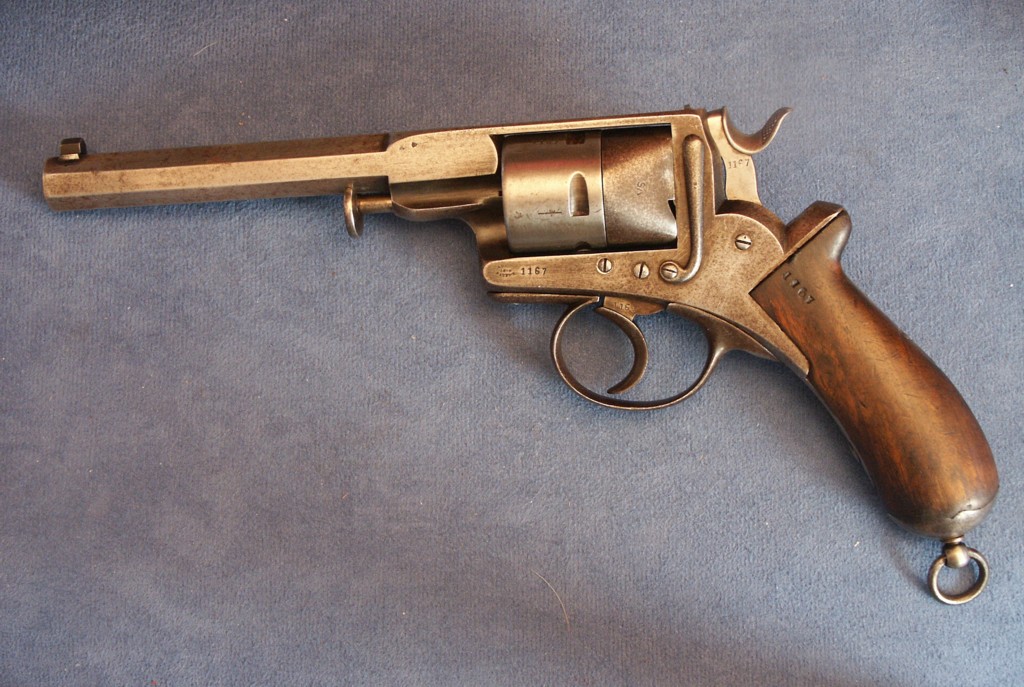
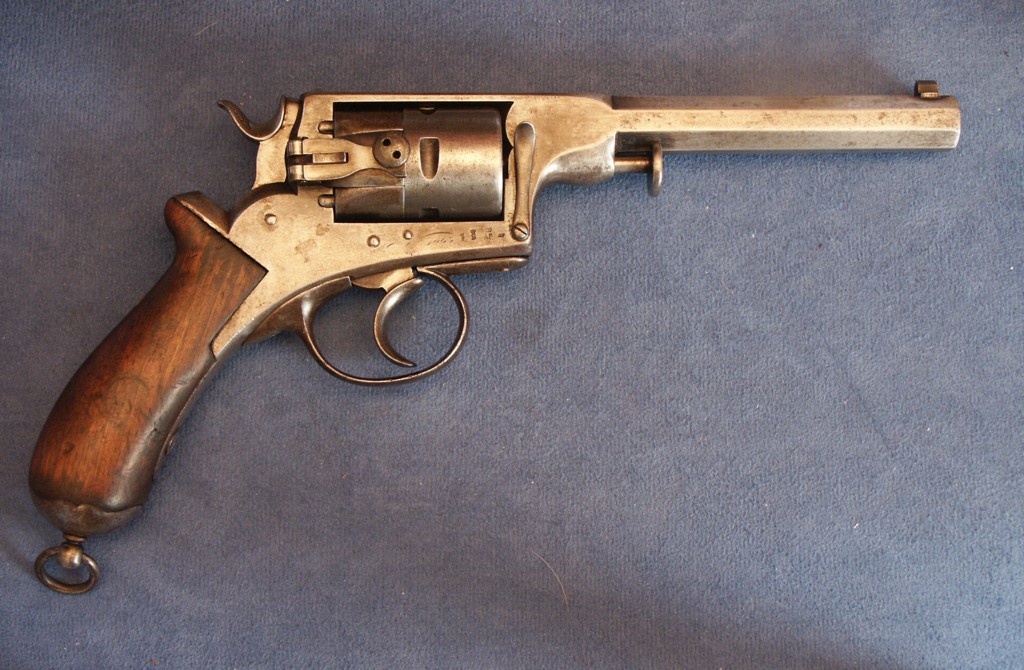
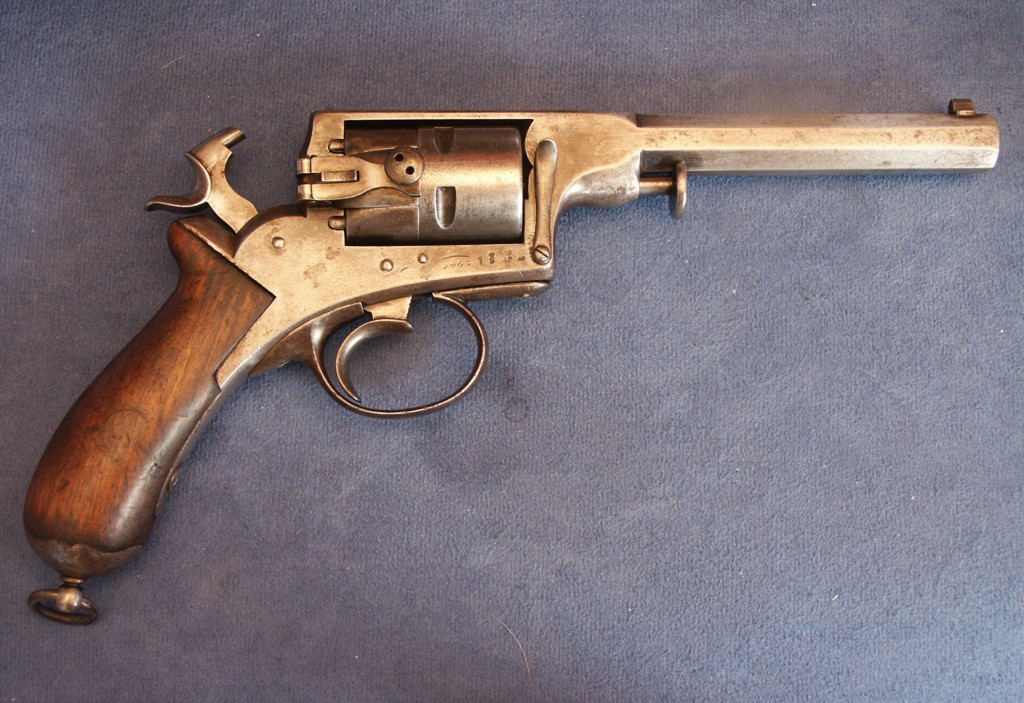
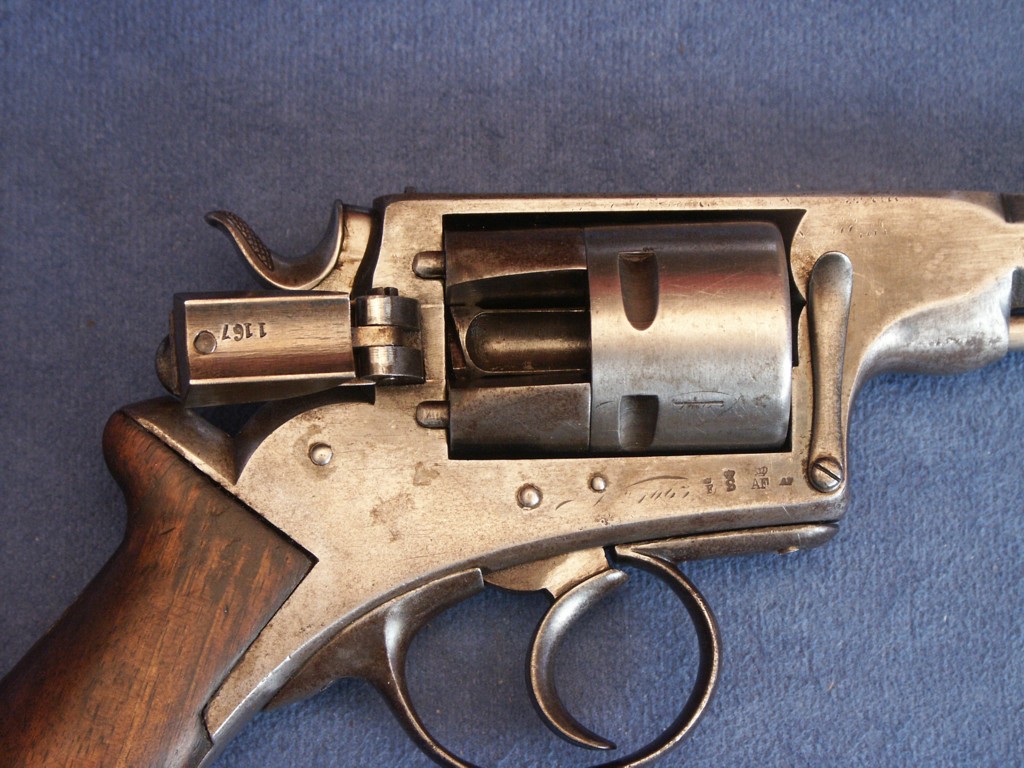
handsome and imposing revolver is clearly a remarkable piece of craftsmanship,
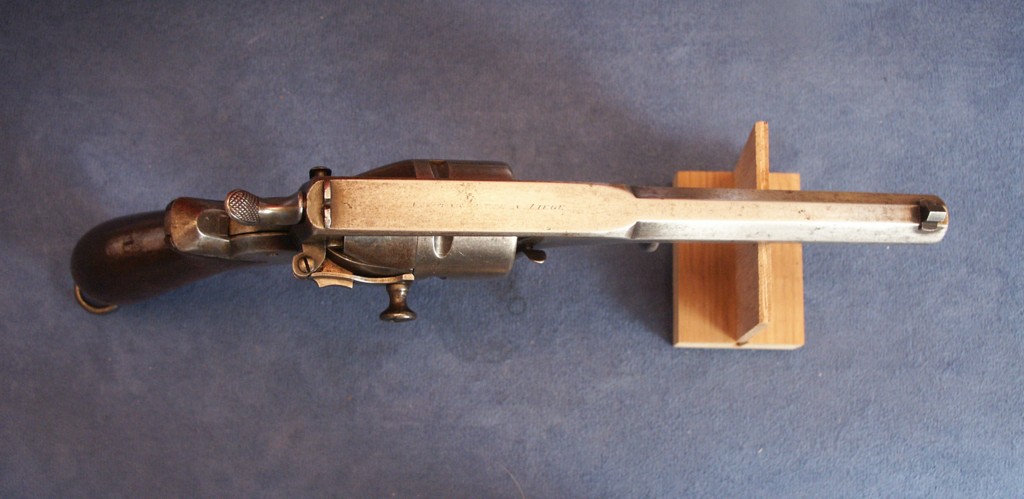
featuring a butt-cap lanyard ring, a pronounced comb, an octagonal barrel, and
high-quality wooden grips. A vertical lever on the right side of the frame acts
as a safety—reminiscent of the horizontal levers found on Gasser and Francotte
models. The item appears to be in excellent condition and dates back to the
1870s.
This is
an extremely rare revolver manufactured by Auguste Francotte, based on the
single-action Adams Model 1856, and converted to centerfire using the system
devised by J.H. van Welij, a Dutch naval officer. It was adopted by the Dutch
Navy in 1874. It is chambered in .450 or 11.4 Welij. See more here:
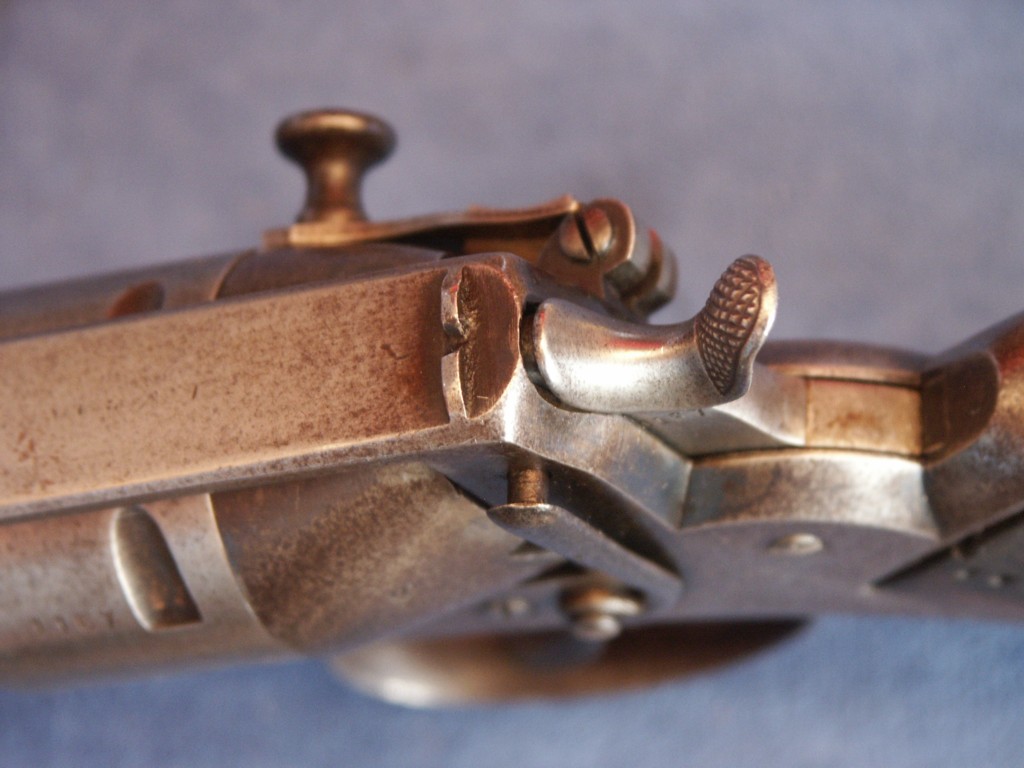
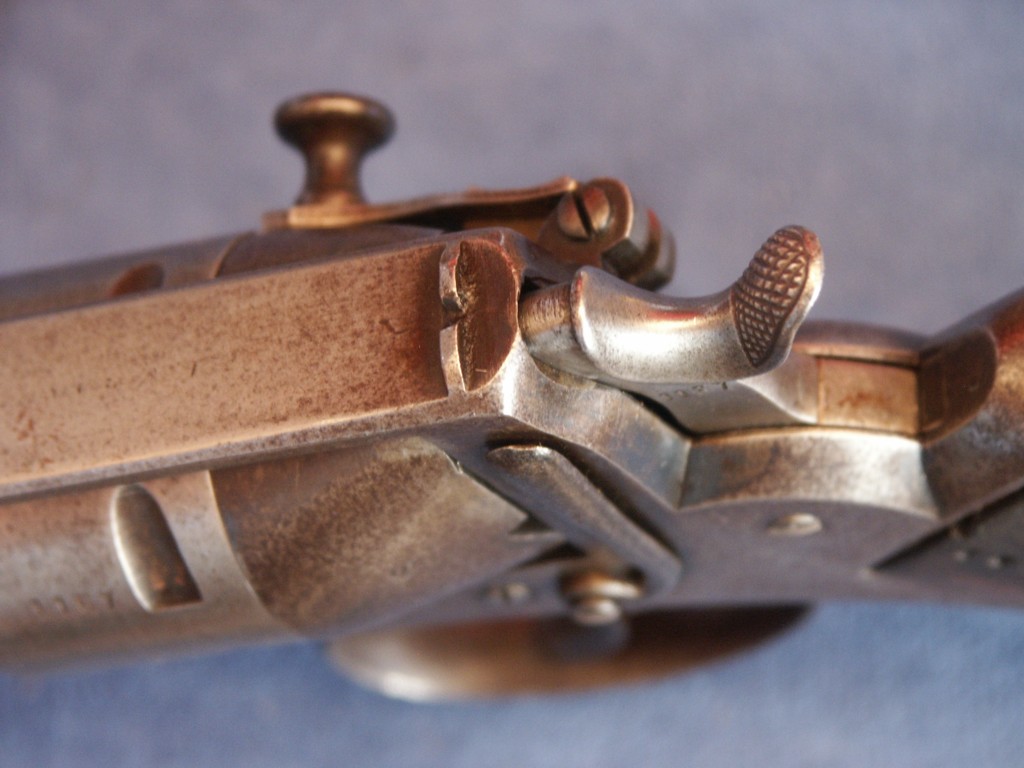
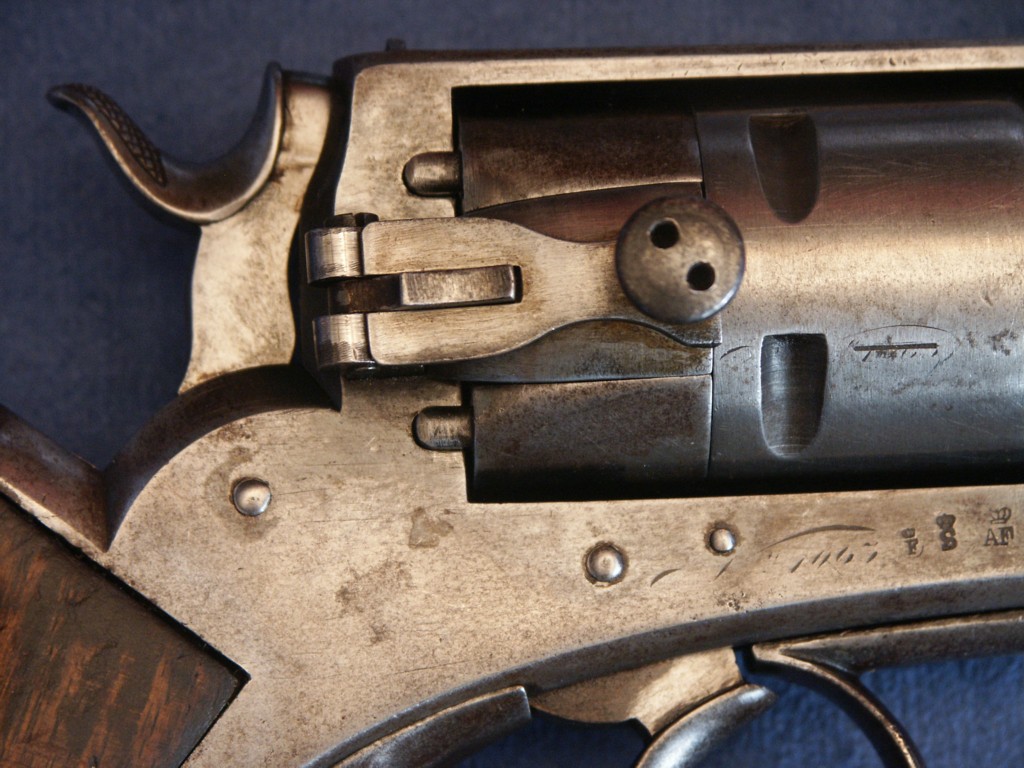
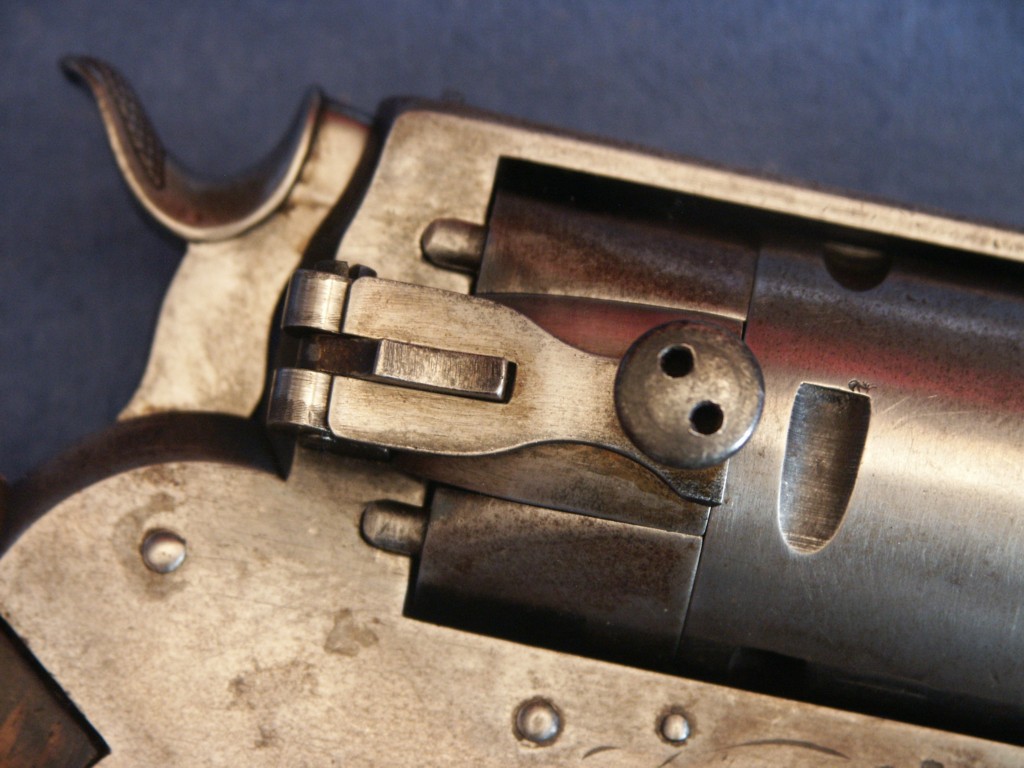
The
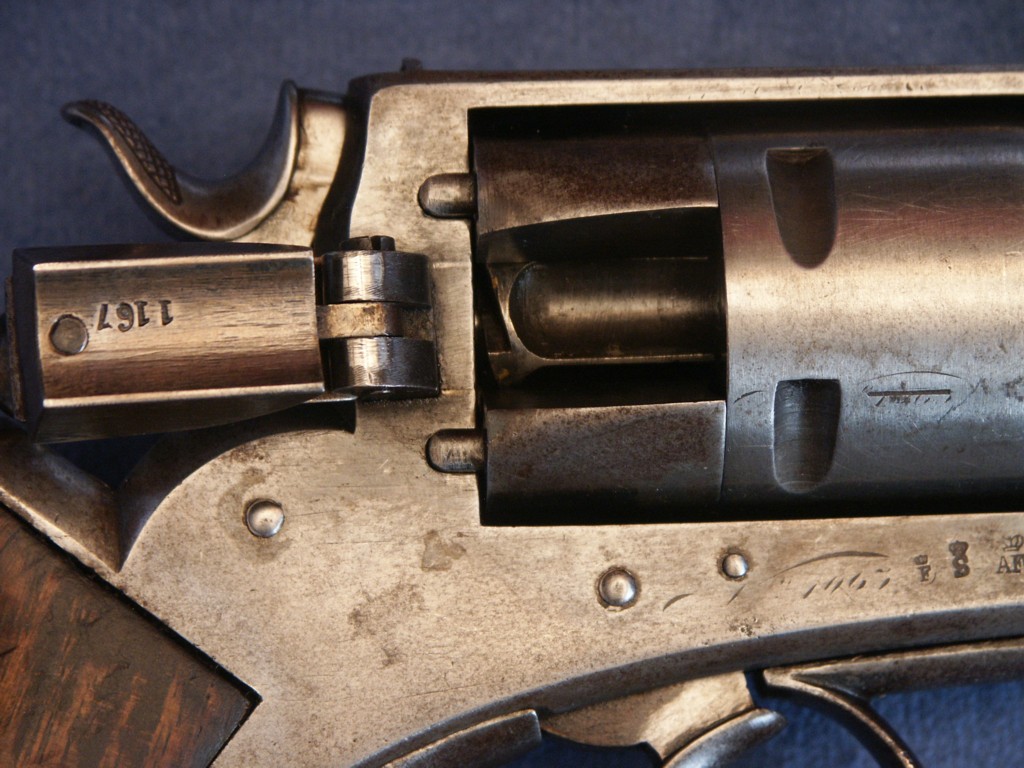
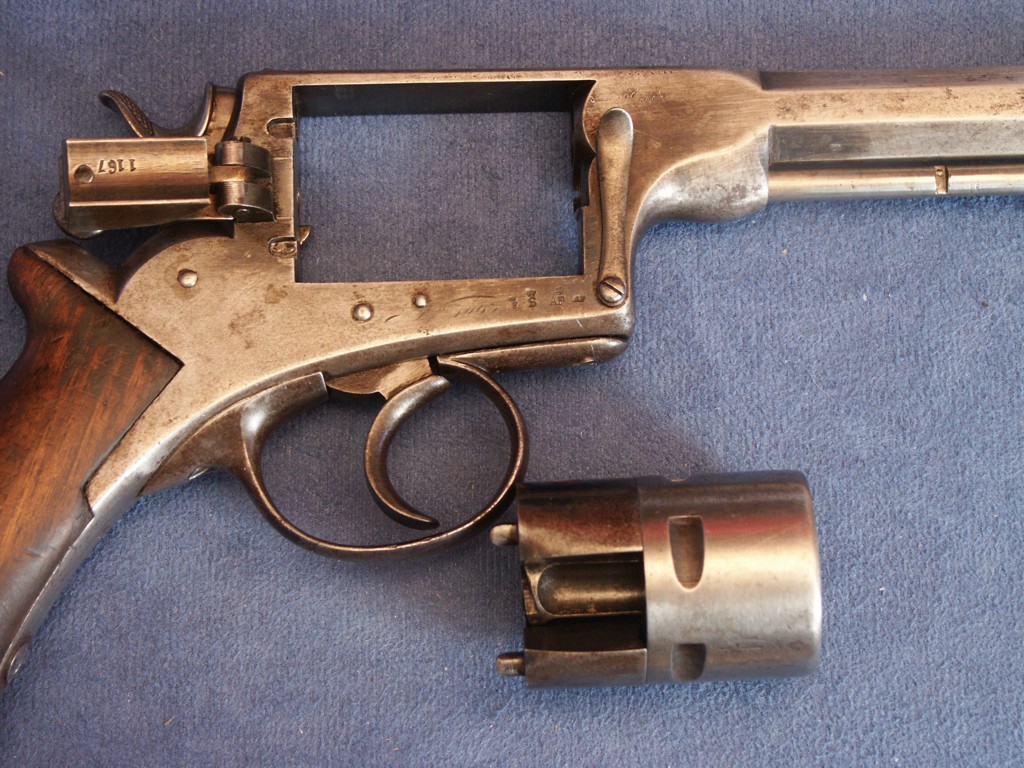
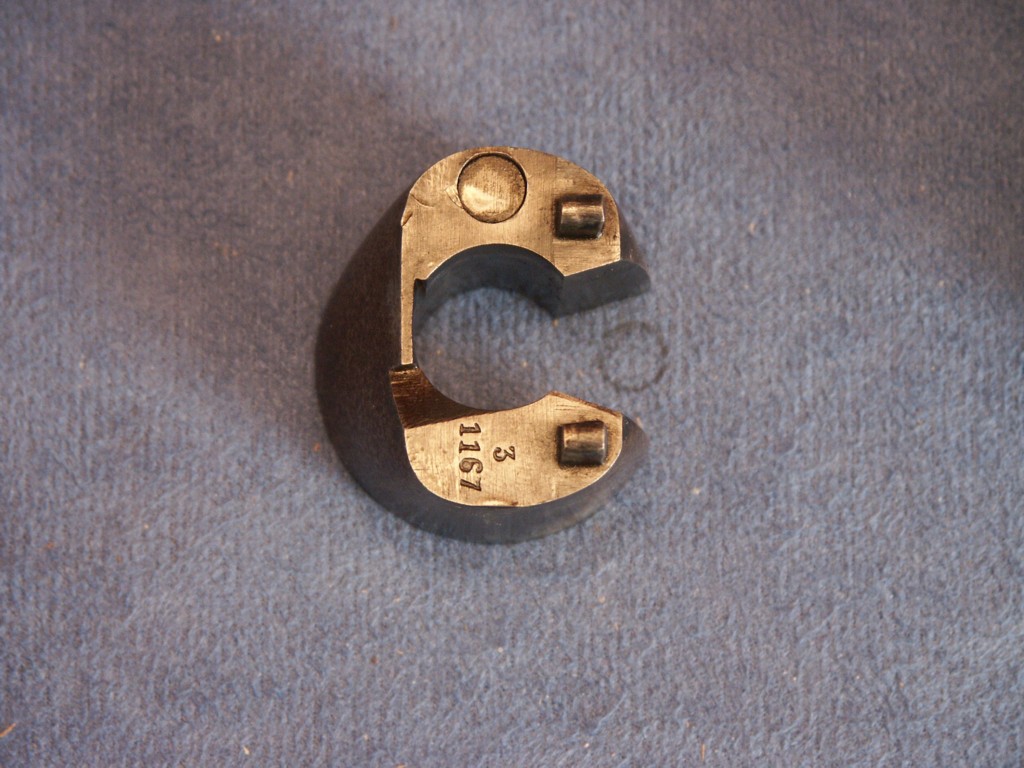
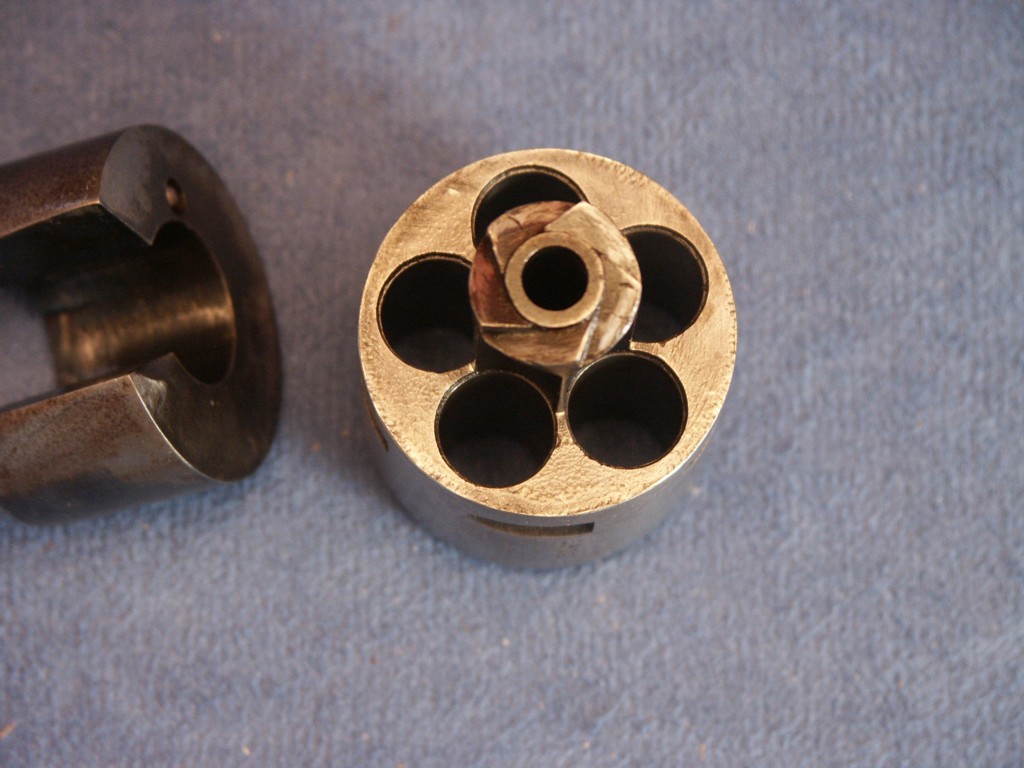
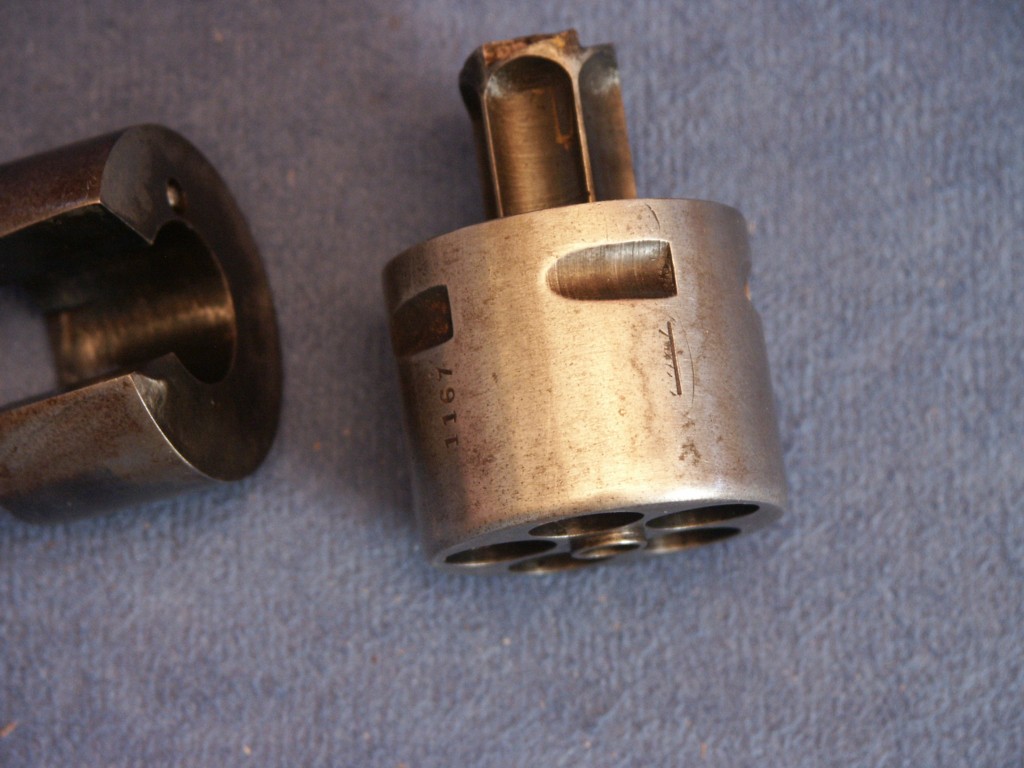
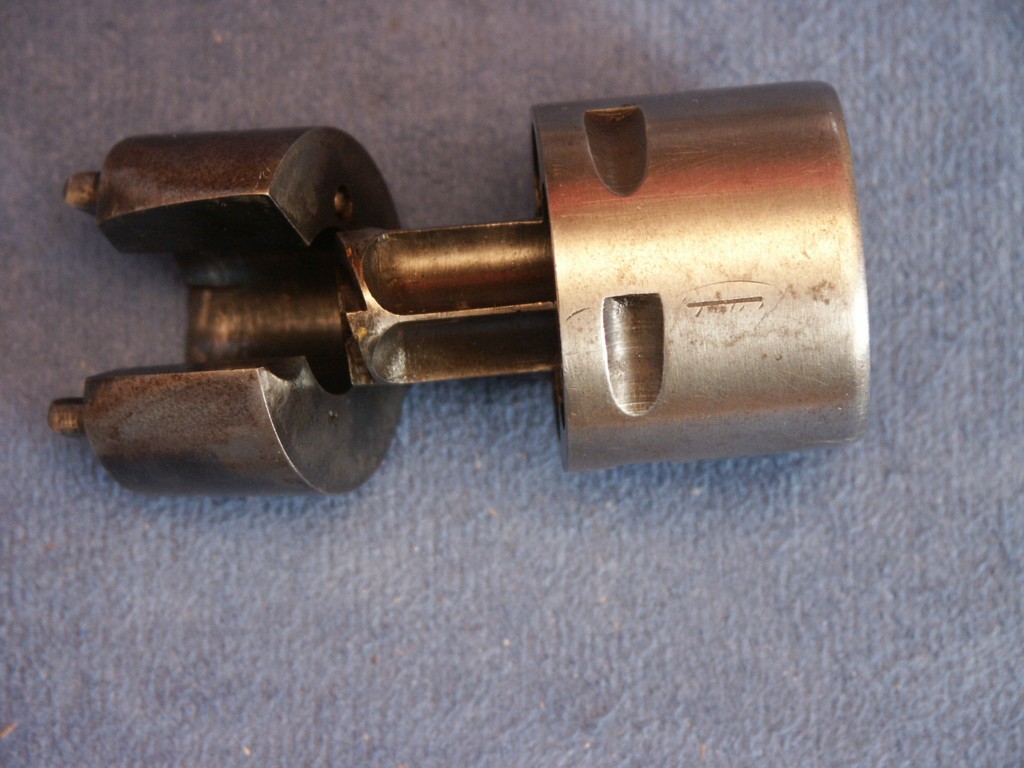
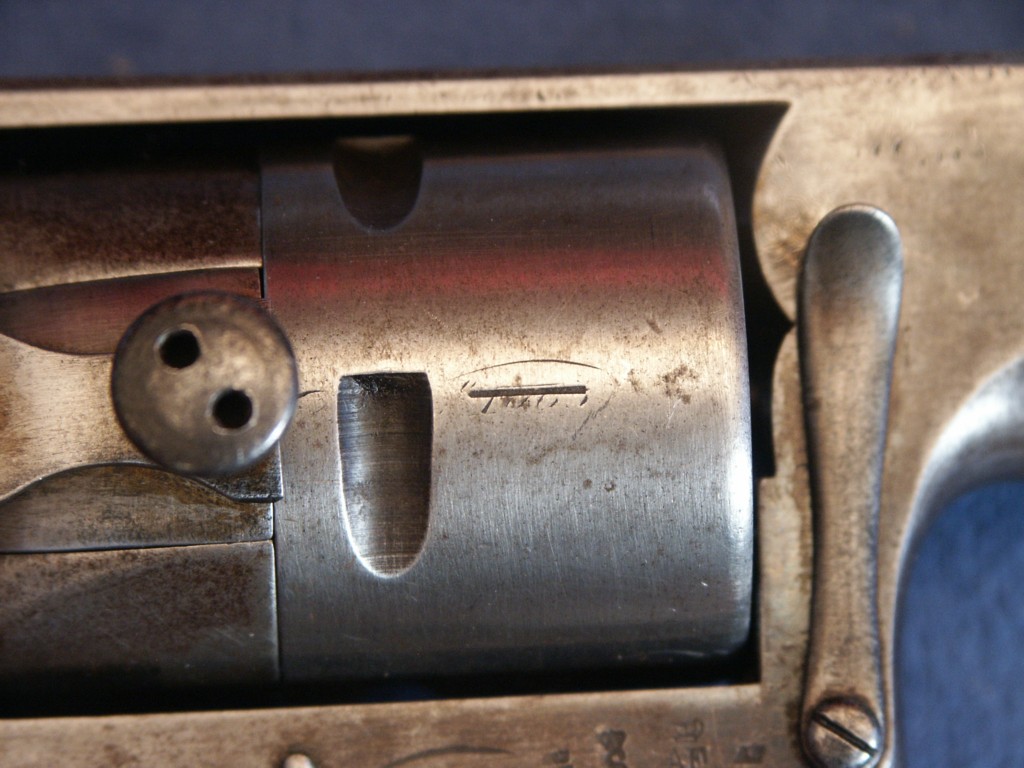
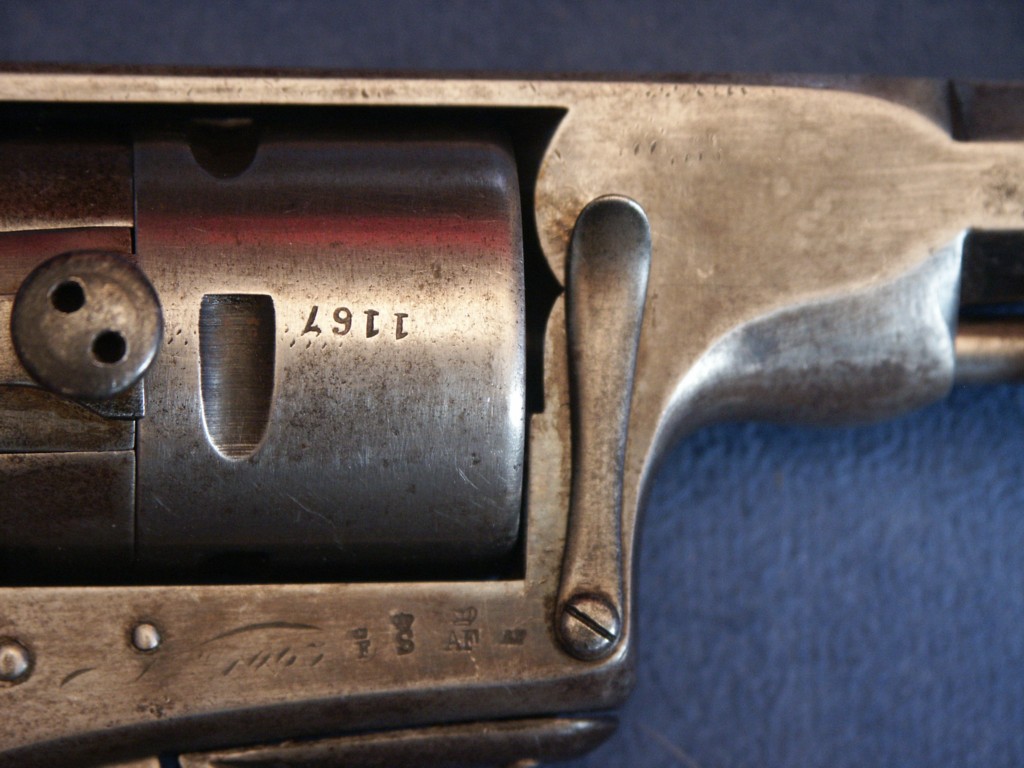
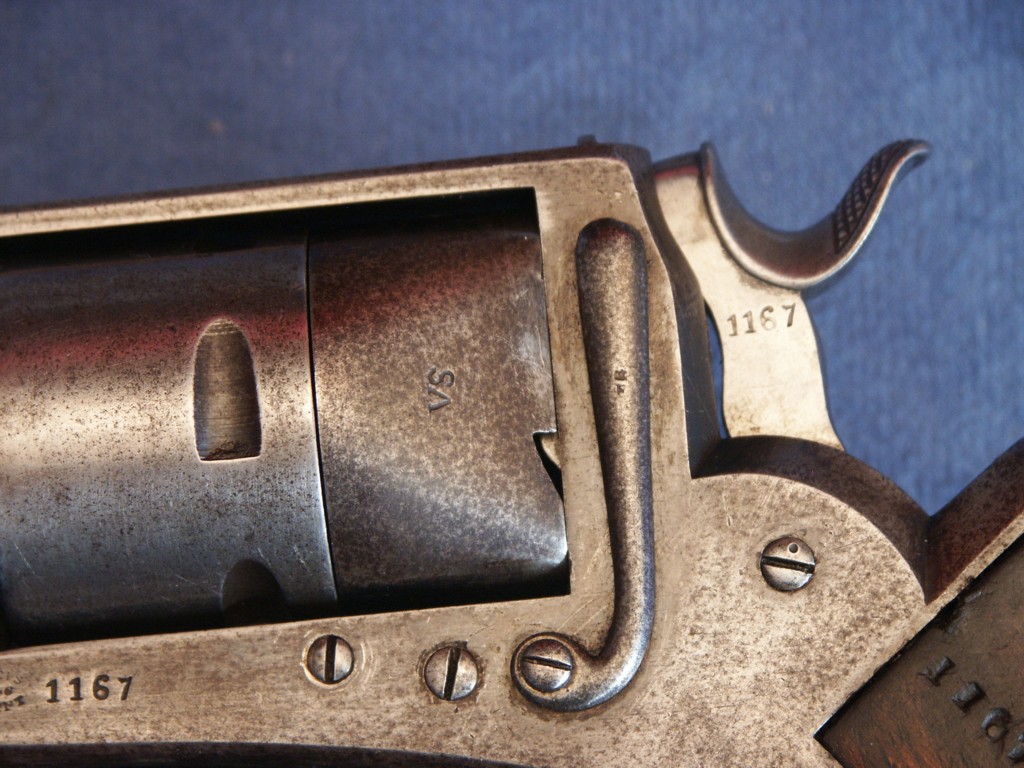
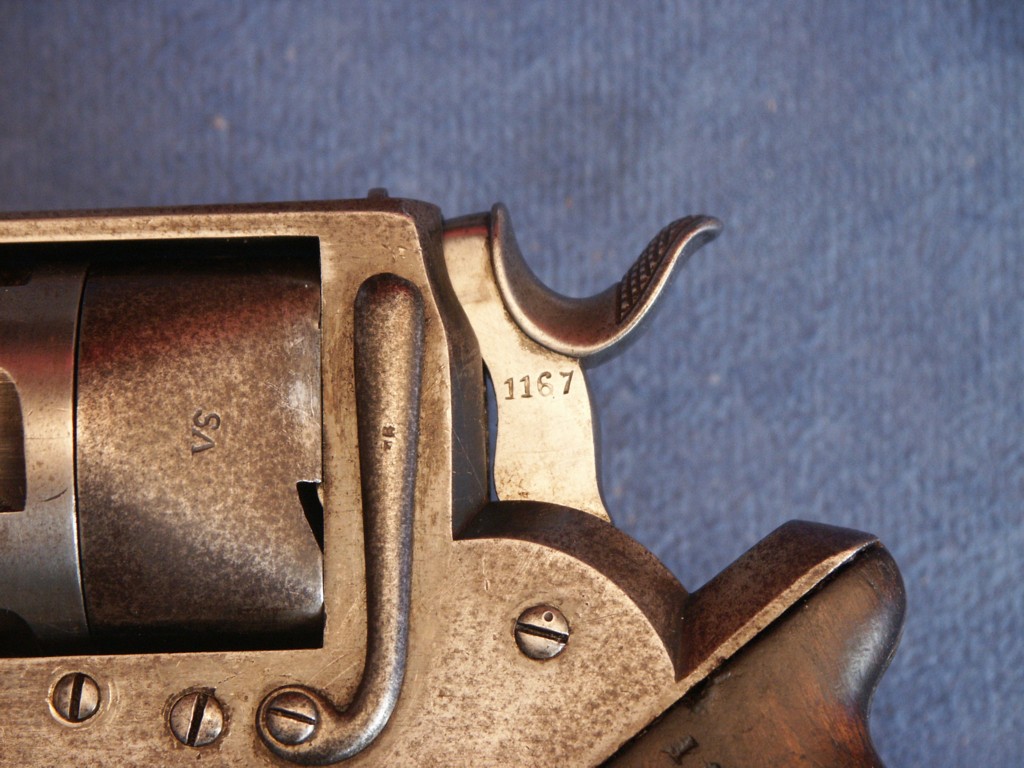
modifications to the cylinder are clearly visible in the provided photos. It is
split lengthwise into two parts:
•A fixed
rear section containing the firing pin, which is struck by the flat-faced
hammer.
•A moving
section—the cylinder itself—holding five rounds; the caliber is approximately
.450, designed for the specific 11.4 Welij cartridge (distinct from the .44
Russian).
The
assembly features a specially adapted loading gate.
The
manufacturer, Auguste Francotte, is one of the figures most extensively
documented on this site. This specific ammunition is known to cartridge
collectors; see, for example:
https://forum.cartridgecollectors.org/t/11-4mm-welij/16955
Details
are provided on this forum: "The 11.4mm Welij cartridge was used in the
conversion—for the Dutch Navy—of the Adams-Francotte percussion revolver, a
conversion designed by J.H. van Welij. Manufactured between 1873 and 1891/1892
at the Delft State Arsenal, it likely bears no markings. Packaging (if any
exists) may refer to 'Revolverpistool A,' the weapon's official designation."
The
Bonhams site mentioned above also notes a very faint marking by gunmaker J.J.
Fraikin on the other specimen sold in this lot. This craftsman is listed in the
"Who's Who of Liège Gunmaking" (*Qui est qui de l’armurerie liégeoise*): FRAIKIN
Jacques Joseph, a gunmaker in Trembleur who may well be the one who performed
the modification.
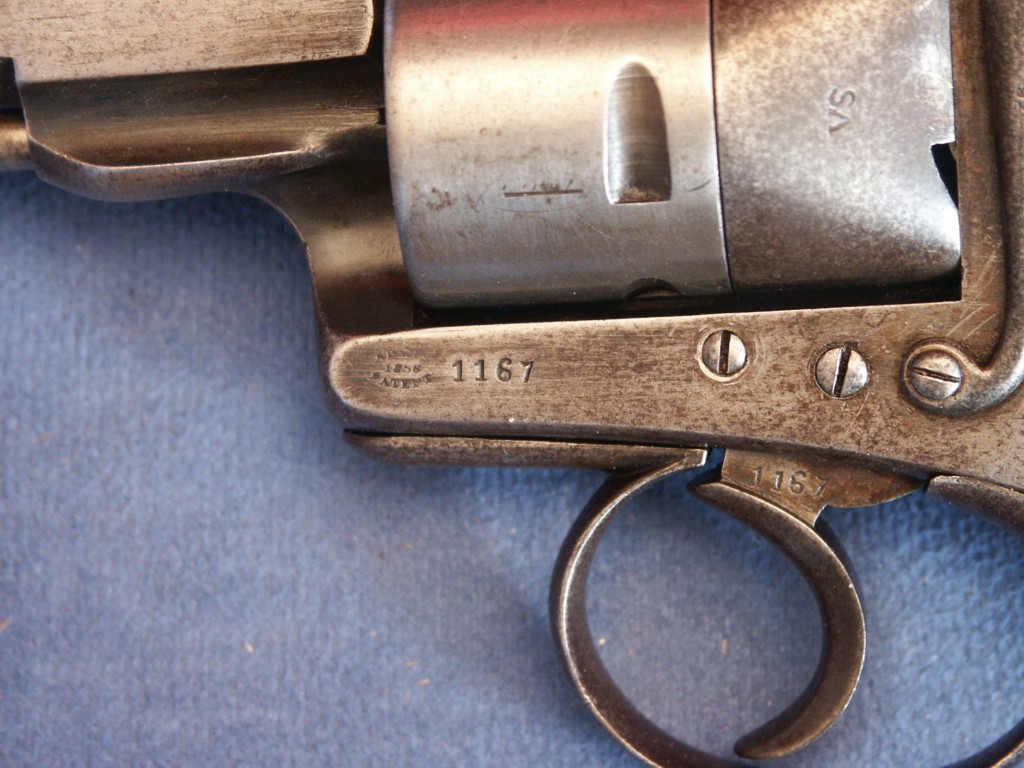
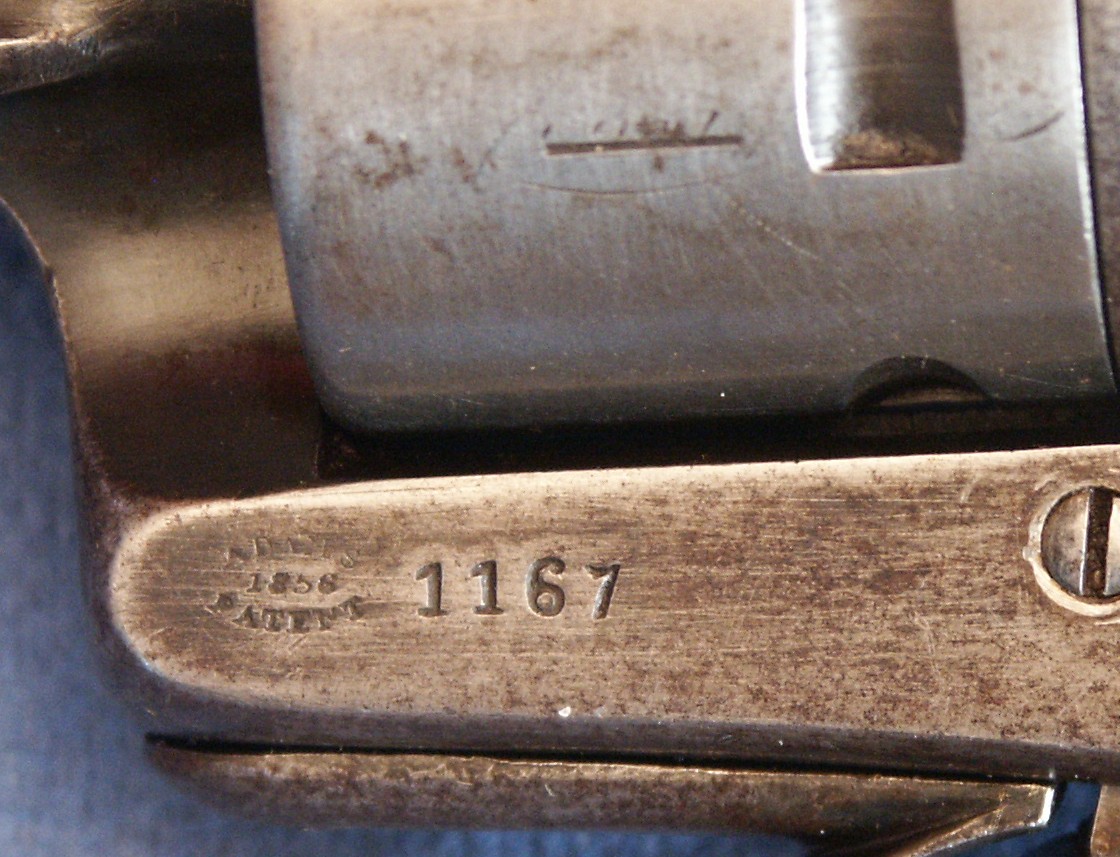
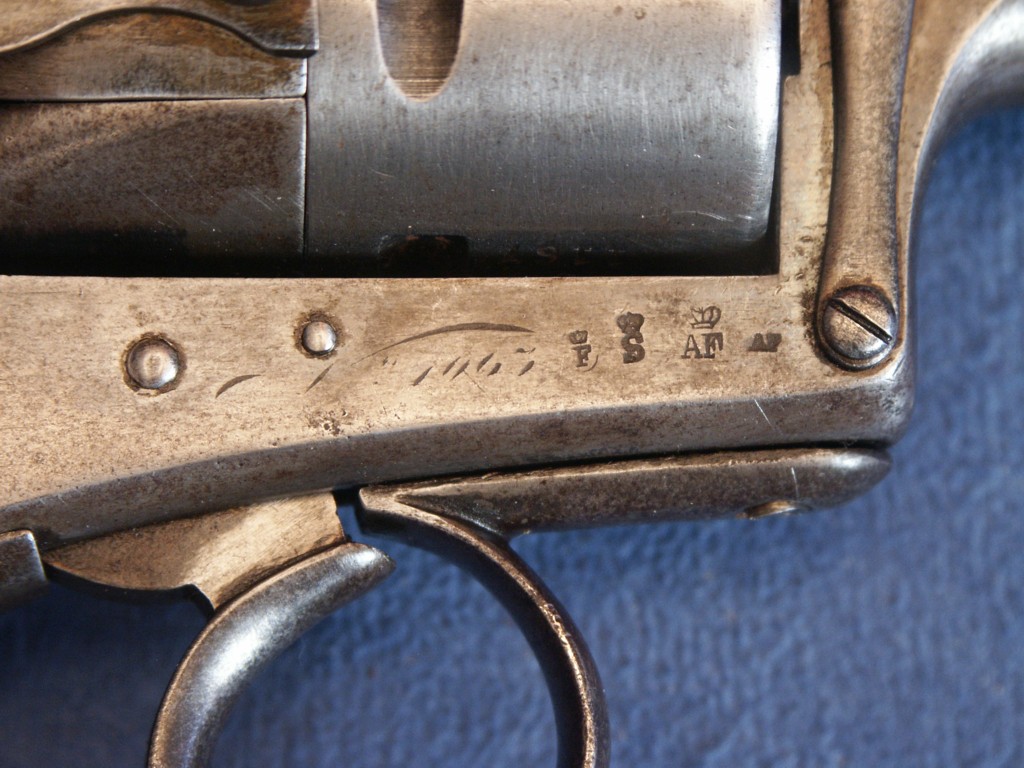
Markings:
Adams
1856 Patent.
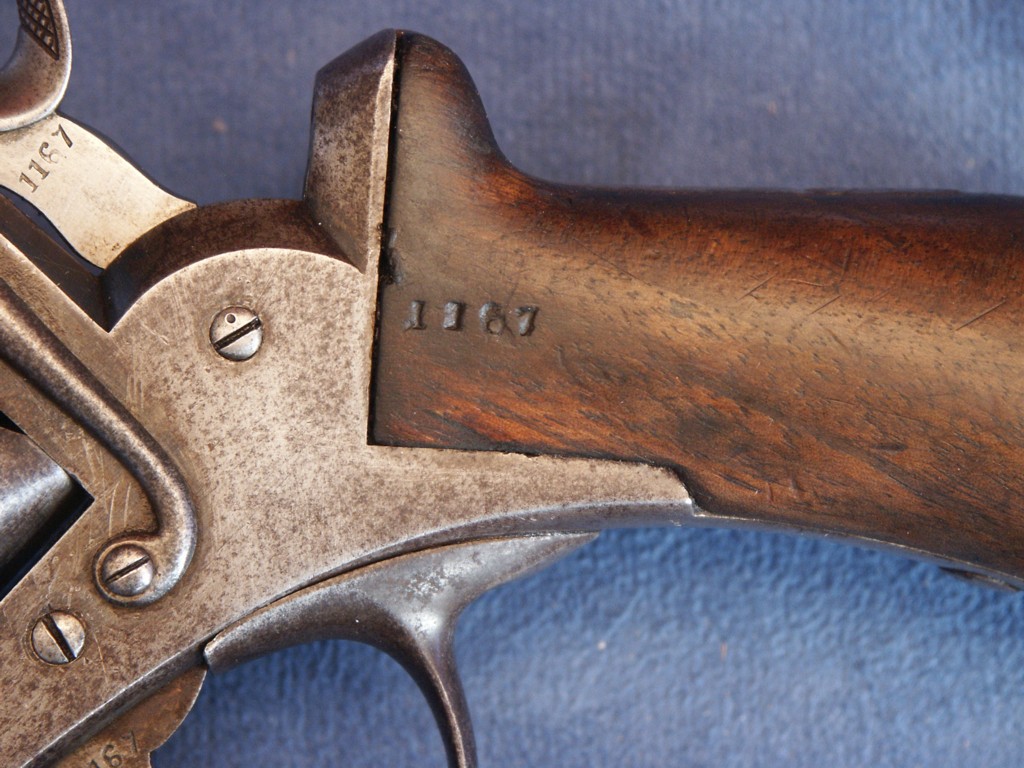
1167:
serial number on all parts of the weapon (this is one of the specimens featured
on the Bonhams auction site cited above).
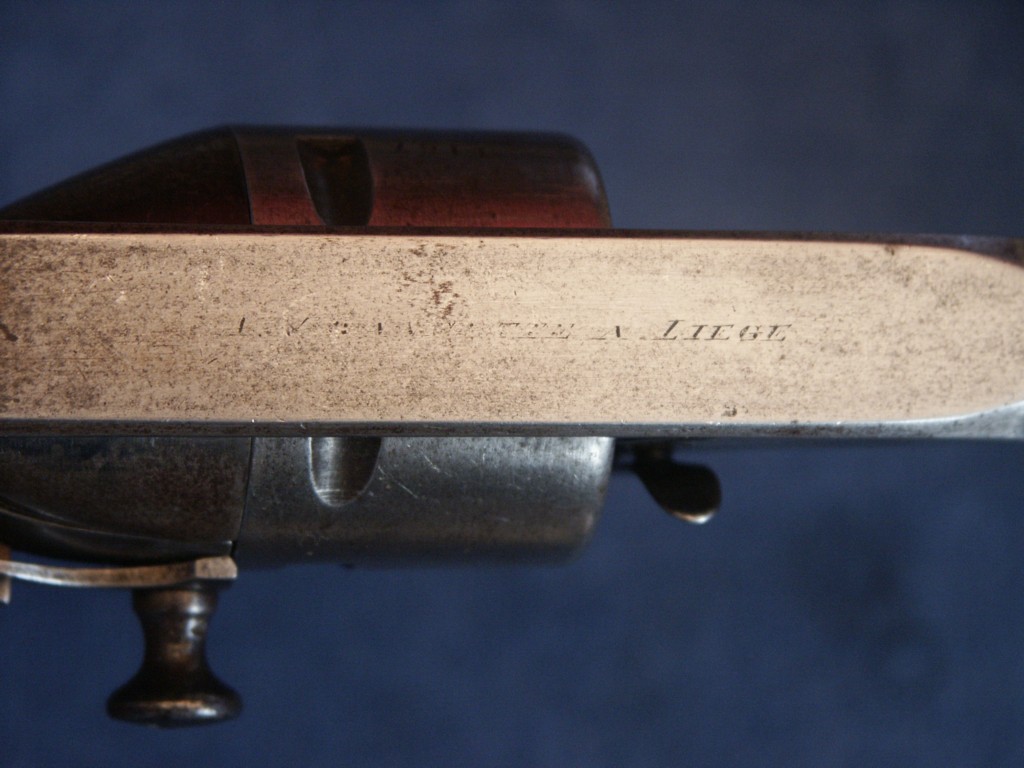
Francotte
à Liège, very faint marking.
Crowned F
and S: inspection marks used from December 30, 1853, to January 26, 1877.
AF and
crowned AF: markings of the manufacturer Auguste Francotte.
Letters
VS on the cylinder: unidentified initials.
Chris, HPH,

Excerpt
from the Bonhams catalogue
A Rare Dutch Naval Officer's 54-Bore Adams Patent
Five-shot Single-Action Welij Conversion Centre-Fire Revolver (Revolverpistool
A)
By A. Francotte
A Liège, No 1167, Circa 1860
With
octagonal sighted barrel, top-strap with traces of maker's details, serial
numbered cylinder, hinged loading-gate on the right side, hammer and frame, the
last stamped 'Adams 1856 Patent' on the left side, arbor pin and catch, spring
safety-stop, trigger-guard and shaped rounded butt-cap, the latter with
suspension swivel, and serial numbered figured rounded walnut butt with
indistinct circular maker's mark on the right side, indistinct mark of J.J.
Fraikin above.
Bibliography:
G. de Vries and B.J. Martens, The
Visser Collection, vol. I, part 4, cat. no.
909, pp. 518-519
J.H. van
Welij was an officer of the Royal Dutch Marines and sat on a number of small
arms committees. He became responsible for the small arms of the Dutch Navy in
1869 and designed a method of converting Adams Francotte percussion revolvers
into breech-loading centre-fire weapons, firing self-contained metallic
cartridges. In 1874 the Dutch Navy adopted the converted revolvers and the parts
required were made by the company J.F.J. Bar in Delft. The conversions were
carried out by the Navy Yard, Amsterdam.
See H.E. Harder / W.A. Dreschler, Die
Militärrevolver der Niederlande 1856-1940, pp.
46-59; and drs B.J. Martens / drs G. de Vries, Nederlandse
Vuurwapens, Landmacht, Marine en koloniale troepen 1866-1895,
pp. 222-225