Some of the most beautiful work of this craftsman are in this book “The Francotte Dynasty”.
For more detail see: The Francotte Dynasty
Auguste FRANCOTTE
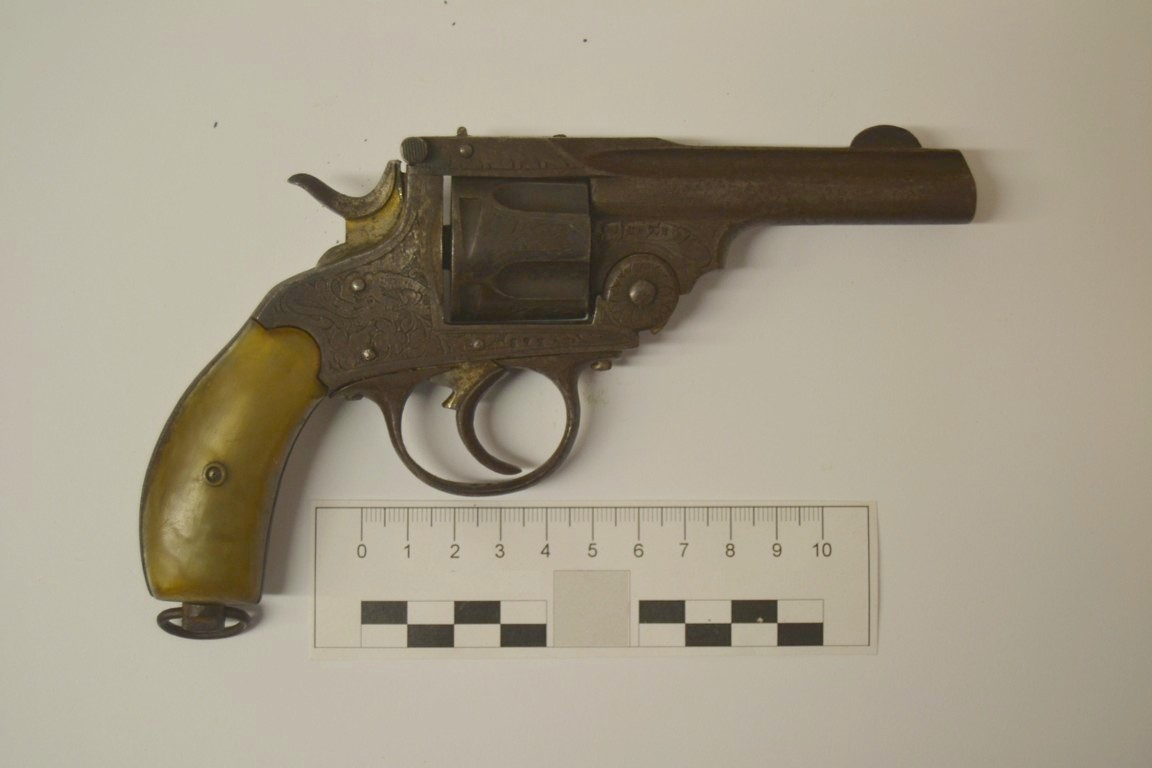
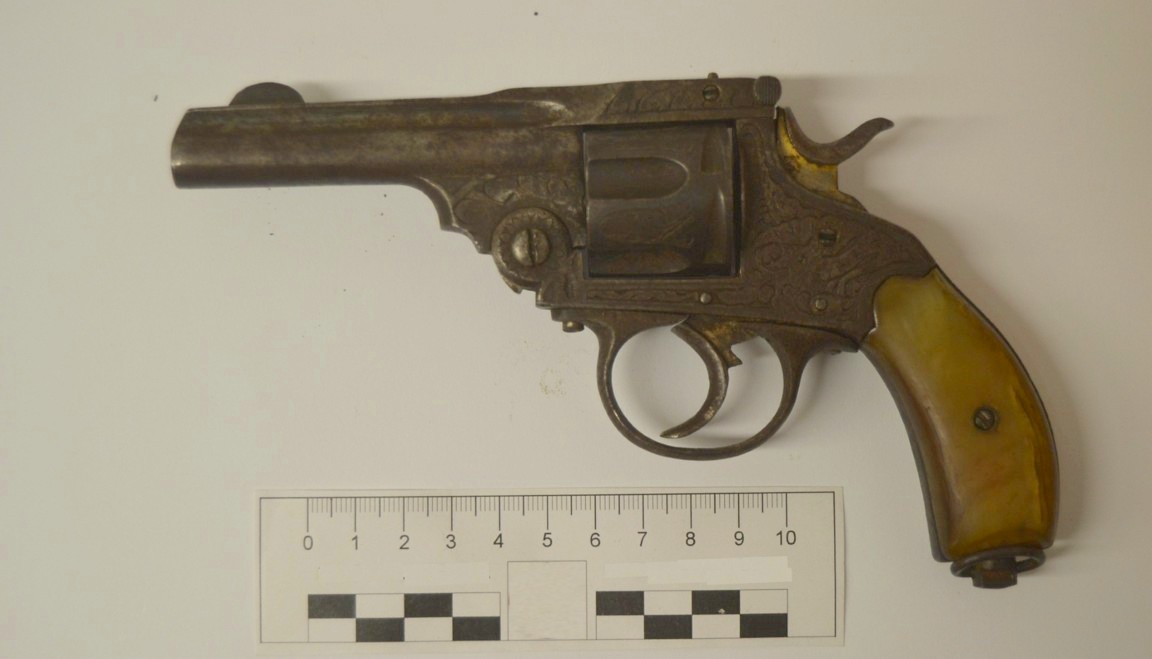
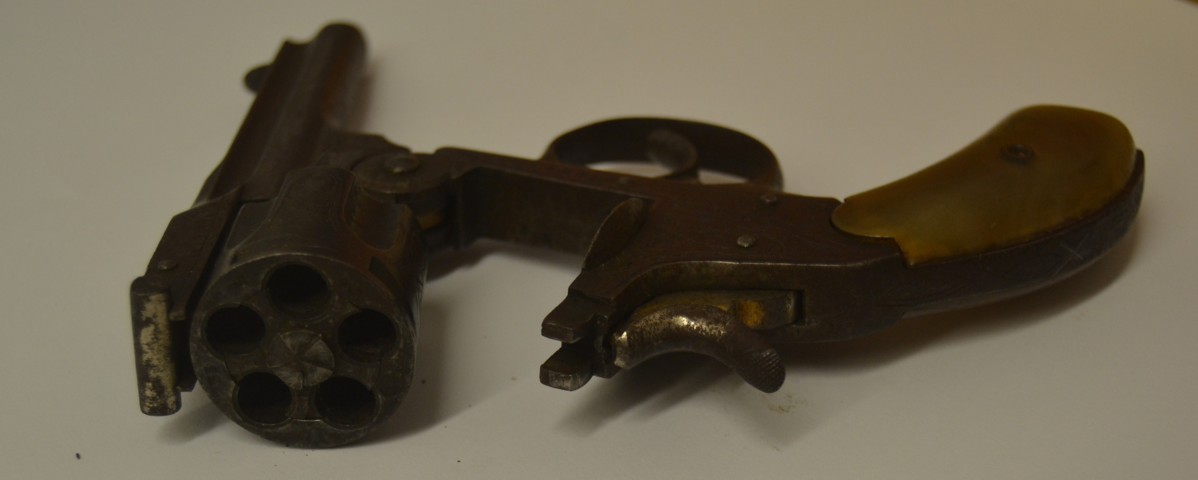
Here is a
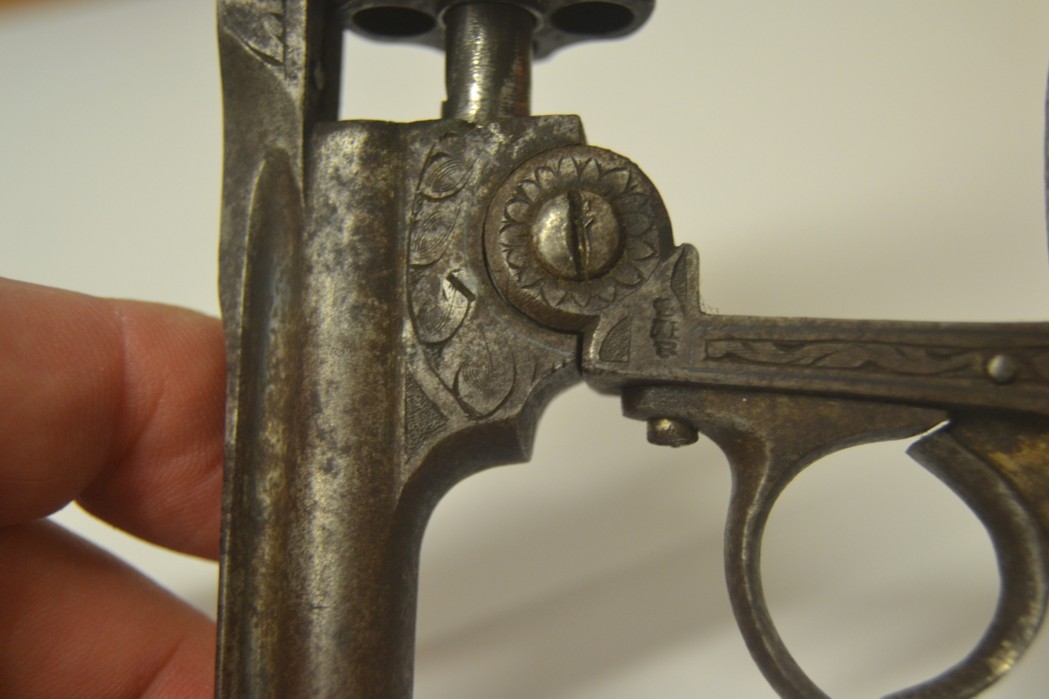
revolver with a "top break" system. This innovative concept for its time was
developed by Smith & Wesson in the early 1870s and represented a major
advancement for the simultaneous loading and unloading of spent casings. S&W
"top break" revolvers are very well documented; for example, a study in French
can be found at the following link:
https://www.armes-ufa.com/spip.php?article2113
These
excellent American revolvers were, of course, copied and adapted by European
competitors, primarily in Spain (Eibar) and Belgium (Liège). The revolver
examined here is an example of this. Despite its pitted and corroded surface,
one can tell that the weapon was manufactured with a good level of finish,
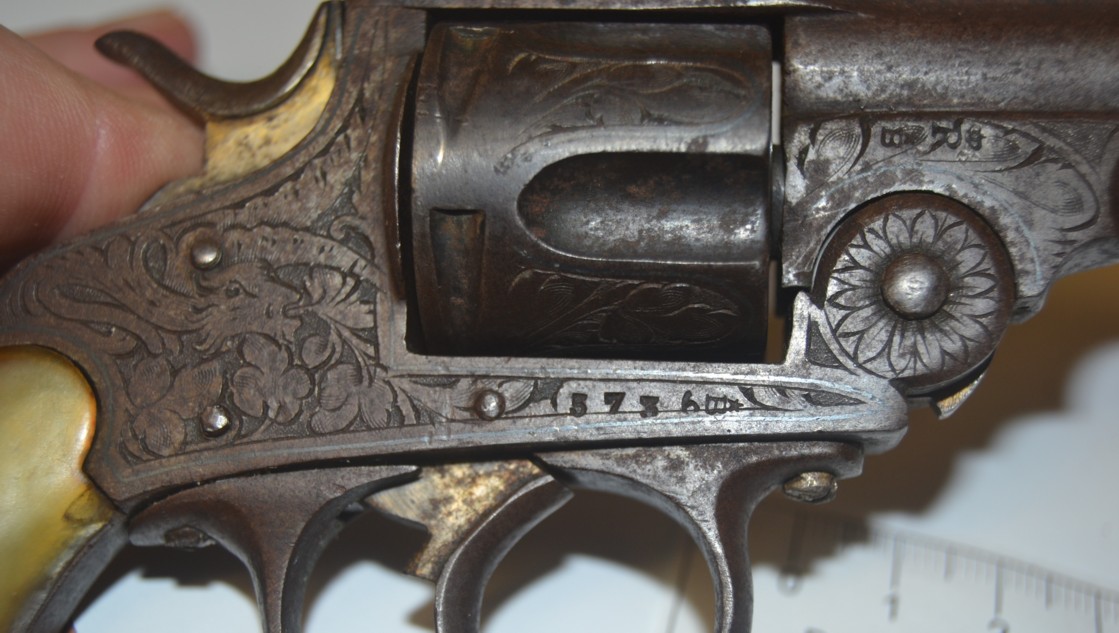
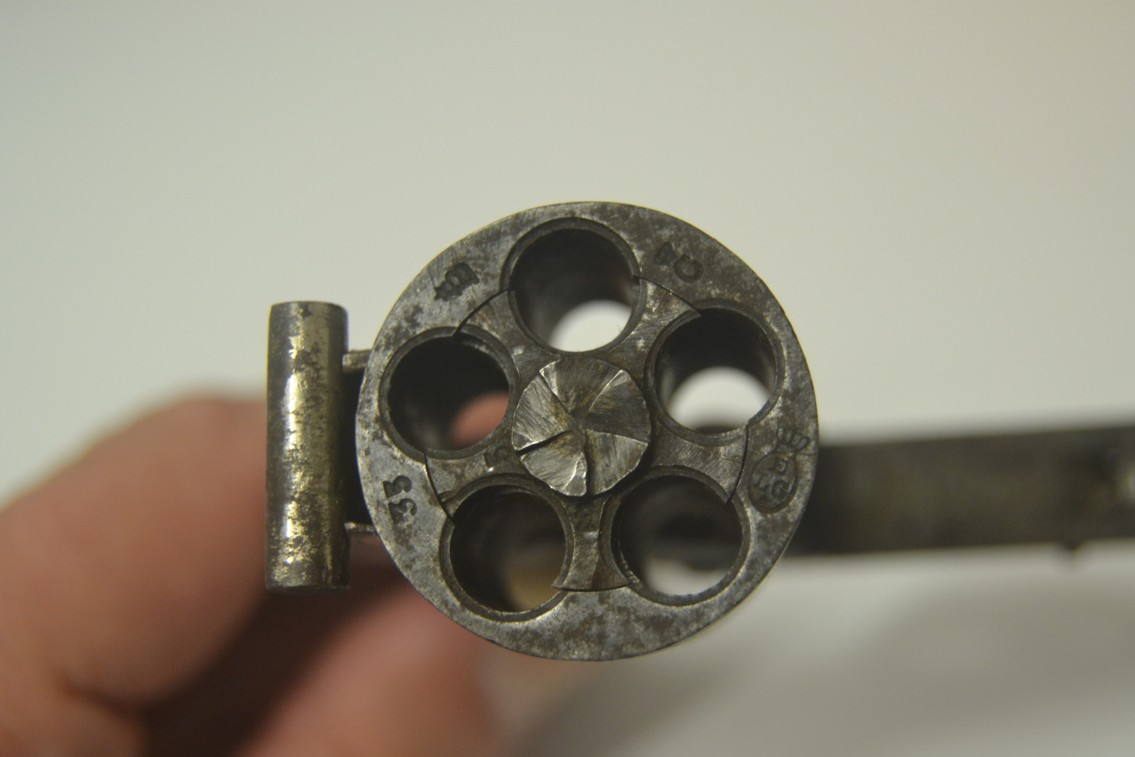
perhaps even luxury: a 5-chamber cylinder with swages, a butt ring, an engraved
frame and cylinder, and mother-of-pearl grips.
Operating
in single and double action, it is supposedly chambered in 7.65 caliber
according to its owner… This seems highly improbable, since 7.65 is ammunition
designed for semi-automatic pistols, and loading it with smokeless powder would
give this revolver little chance of survival, not to mention the risks taken by
the user… It can only be a .32 or .320 caliber black powder round, which
corresponds to 8 mm.
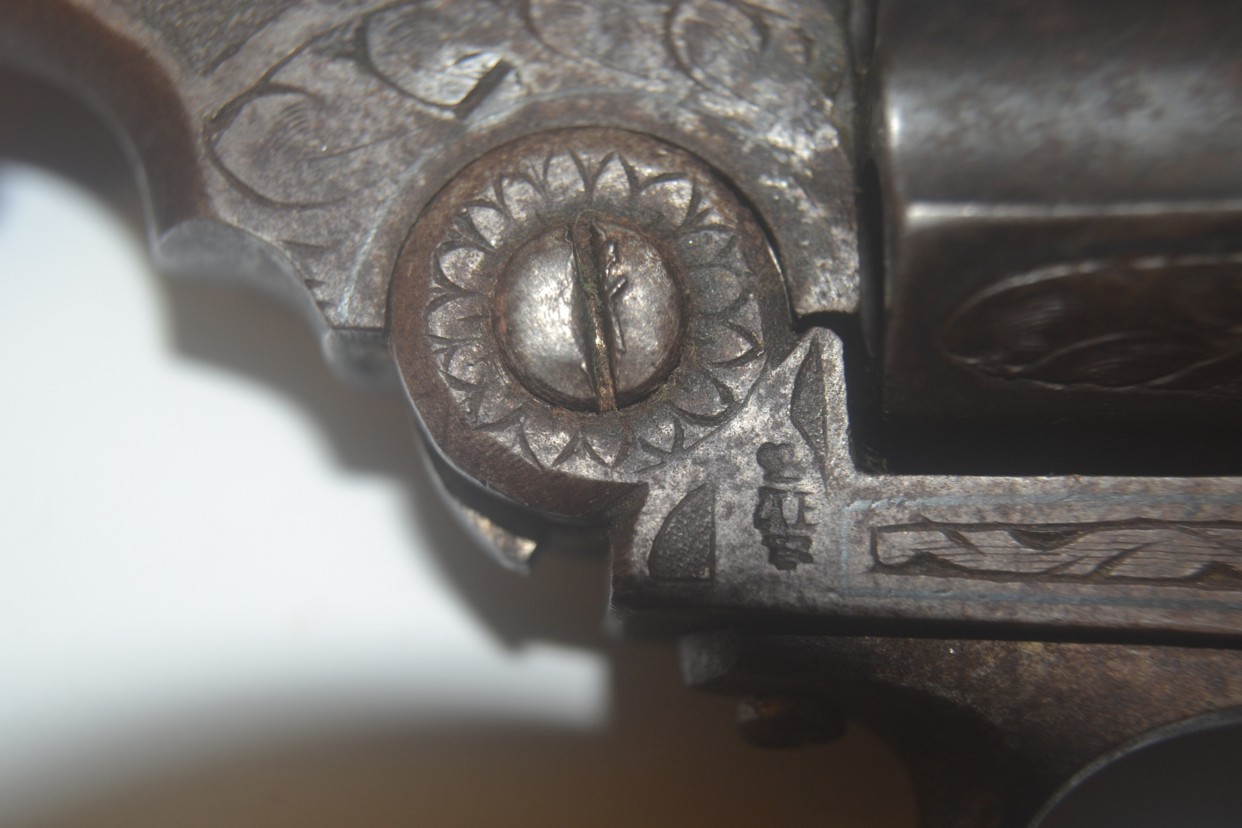
Markings:
5736:
probably serial number.
B under a
star: inspector's mark from January 27, 1877.
R
crowned: verification mark for rifled handguns, from January 30, 1894 to
February 26, 1968.
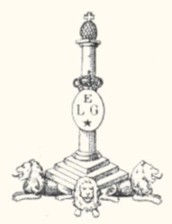
ELG on a
crowned oval star: proof house mark after 1893.
Crowned C
(rear of the cylinder): probably the mark of one of the two forges/foundries for
custom-made cylinders.
33 (rear
of the cylinder): serial number of the cylinder according to the foundry
mentioned above?
Ribbon:
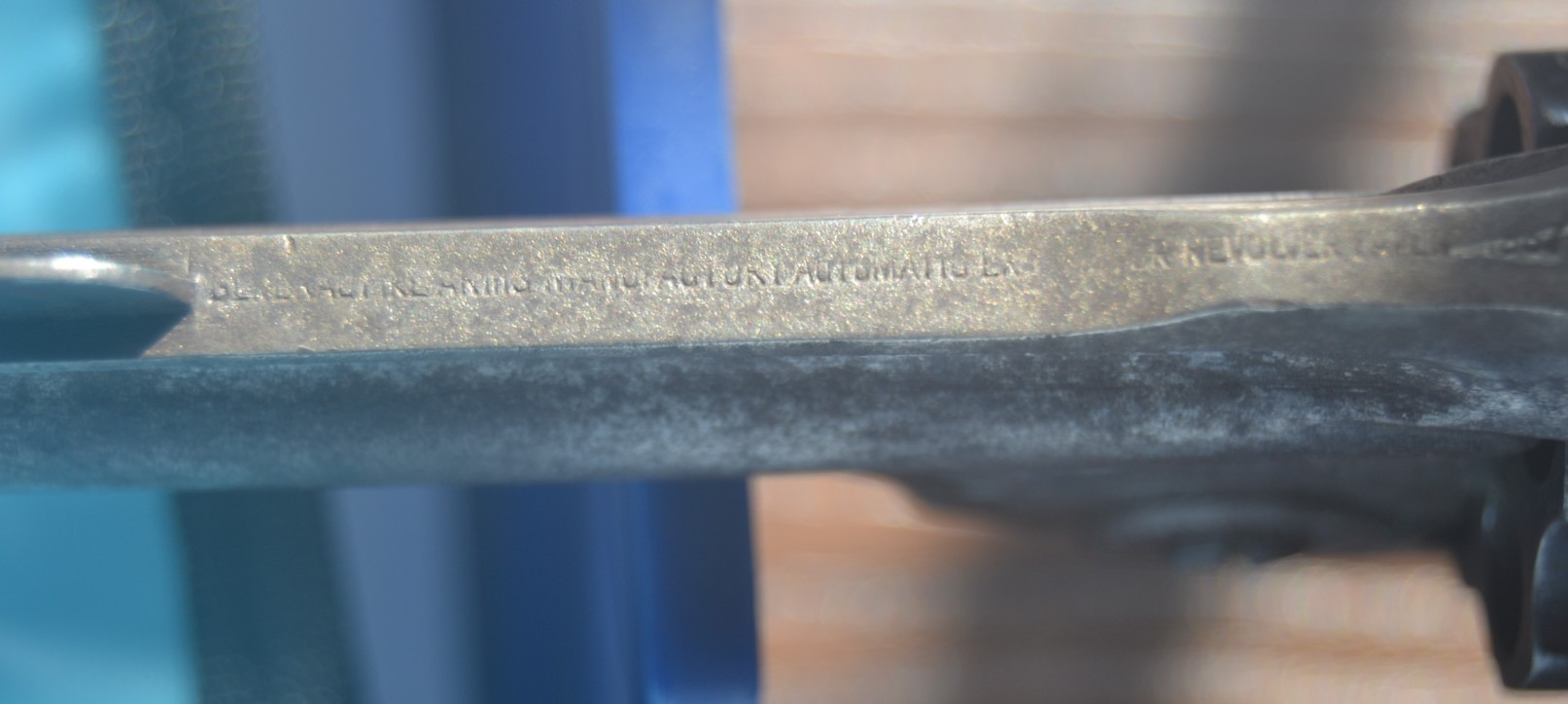
GENERAL ARMS MANUFACTORY AUTOMATIC EXTRACTOR REVOLVER PATENT 1887. Lacking
further information, this inscription seems rather fanciful.
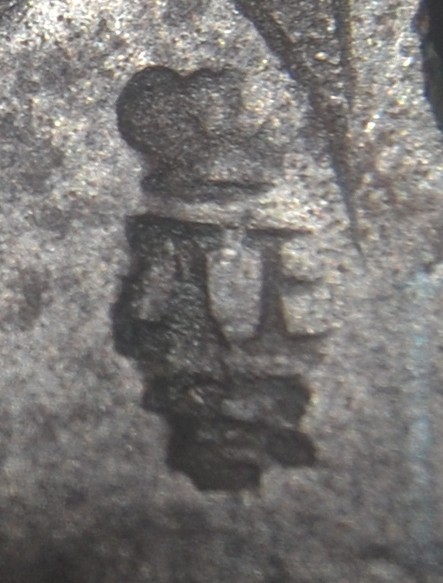
Initials
AF under a crown: marking of the famous Liège firm of Auguste Francotte. This
highly reputable company produced a considerable number of firearms of all
types, most of which can be found on the website
As well
as in a dedicated book, see:
https://www.littlegun.be/livres/a%20a%20livre%20alain%20francotte.htm
Period
catalogs from Auguste Francotte describe his extensive production. They include
descriptions of revolvers of the type examined here, with the note "Revolvers
with extractor. Models imitating Smith & Wesson, with centerfire barrel." The
calibers offered are the classic European .450, .380, and .320 black powder
cartridges, which confirms the previous statement regarding the revolver's
caliber.
In
conclusion, this .320 caliber top-break revolver, inspired by Smith & Wesson
revolvers, was manufactured in Liège by the firm of Auguste Francotte.
The markings indicate production after 1894.
Chris, HPH, Alain